
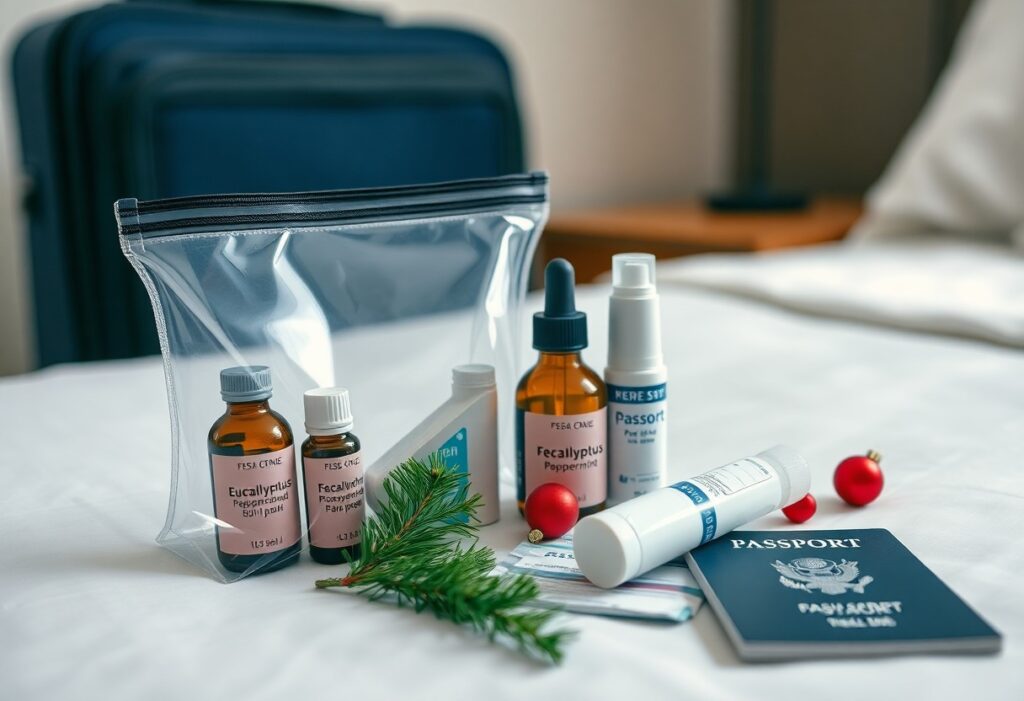
It’s smart to pack a Holiday Travel Breathing Kit that keeps you comfortable on flights and in crowded terminals; this guide helps you choose TSA-approved, natural remedies like saline sprays, inhaler-compatible items, and calming aromatics while warning you to consult a professional if you face severe allergies or asthma attacks, and to keep medications accessible in your carry-on so your travel stays safe and breezy.
You can breeze through Holiday travel with a compact kit designed to ease cabin irritation: flight dryness and airborne allergens can worsen breathing, so pack TSA-approved, natural remedies like saline sprays, eucalyptus inhalers, and a charcoal-filter mask to keep symptoms down. Make sure your items meet carry-on liquid rules and any medical exemptions, and keep the kit handy for inflight relief and allergy-safe comfort throughout your trip.
Why You Need a Breathing Kit for Holiday Travel
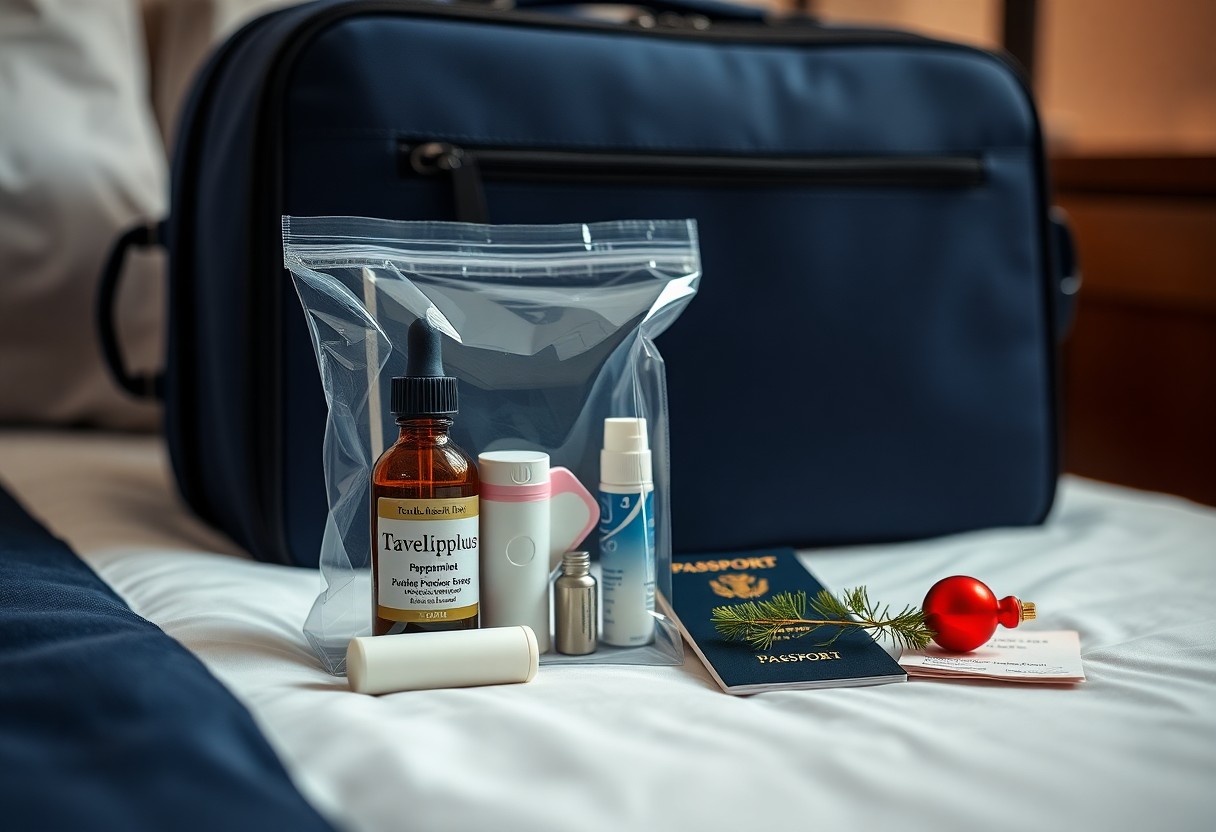
Flights use HEPA filtration that captures about 99.97% of particles ≥0.3 μm, yet cabin humidity often falls to 10-20%, drying your nasal passages and increasing irritation. Pack 0.9% saline spray, a sealed inhaler or solid balm, and a lightweight N95/KN95 in your quart bag-TSA allows liquids up to 3.4 oz (100 mL). Having these items gives you fast relief and lowers the chance of congestion, sore throat, or worsening allergy symptoms on long trips.
Common Travel Ailments
During travel you frequently face dry nasal passages, congestion, sinus pressure, sore throat, and cough, particularly after flights longer than 3-4 hours. Allergens and close quarters can trigger seasonal allergies, and if you have asthma mild irritants may provoke wheezing. Motion sickness and travel anxiety also make breathing feel harder, so a compact kit helps you treat symptoms quickly and avoid escalation mid‑journey.
Benefits of Natural Remedies
Natural options like 0.9% saline spray, eucalyptus inhalers, menthol balms, and honey lozenges often ease congestion and soothe mucous membranes without systemic side effects. Saline restores moisture within minutes, while topical inhalants can provide immediate relief of nasal blockage. Keep important oils diluted and avoid them for young children or people with asthma, since concentrates can trigger bronchospasm.
You can use 0.9% saline sprays 2-4 times daily to maintain moisture, and apply 1-2 drops of eucalyptus to a cloth or personal inhaler for short, controlled inhalations to relieve perceived congestion. Solid balms and roll‑on aromatics fit TSA carry‑on rules and reduce the need for oral decongestants on long trips. Test a small patch first and avoid important oils around children, pets, or anyone with reactive airways to prevent adverse reactions.
Understanding TSA Guidelines
When packing natural remedies for flights, follow specific TSA rules: the 3-1-1 rule (3.4 oz / 100 mL per container in a 1‑quart clear bag), medical liquids allowed in >3.4 oz quantities if you declare them at screening, and powders over 12 oz (350 mL) may need extra screening or be barred from carry-on. You should also note restrictions on aerosols, batteries, and pressurized oxygen so your breathing kit clears security without surprises.
What is TSA-Approved?
“TSA‑approved” often means an item meets screening rules or is accepted by the agency rather than a formal certification. You can rely on examples like Travel Sentry® locks for checked bags, approved medical devices such as inhalers and EpiPens, and medically necessary liquids that you can carry beyond 3.4 oz if you declare them at the checkpoint for inspection.
Essential Travel Rules
Pack liquids in line with 3.4 oz (100 mL) / 1 quart bag limits for carry-on, place spare lithium batteries in carry-on only (under 100 Wh allowed; 100-160 Wh requires airline approval; >160 Wh prohibited), and keep aerosols like nasal sprays under allowed volumes. You should never bring pepper spray in carry-on (allowed only in checked baggage up to 4 fl oz / 118 mL with safety caps), and be prepared for TSA to open containers for testing.
Airlines can add rules: get pre‑approval for portable oxygen concentrators and check state laws before transporting cannabis-derived remedies, since federal law governs airports. If you have a 4 fl oz imperative oil, transfer to smaller bottles or put it in checked luggage. For batteries, you should pack spares in individual plastic sleeves and keep them accessible to avoid delays at screening.
TSA-Approved Essentials
When you assemble your TSA-approved breathing kit, prioritize items that comply with the 3.4 oz / 100 mL rule or are non-liquid solids; small bottles, roll-ons, and inhalers are easiest to screen. Keep prescription inhalers separated with a copy of the prescription or label and place all liquids in a clear quart-sized bag to speed checkpoint checks. Have quick access to these items so screening stays efficient.
Choosing the Right Items
You should pick compact, practical remedies: a travel-size saline spray (≤3.4 oz), a labeled prescription inhaler, a solid vapor balm, and a small necessary-oil roller (≤3.4 oz) if you use aromatherapy; disposable nasal strips add non-liquid relief. Opt for items with clear labeling and single-use options when possible to limit extra screening questions.
Packing Tips for Smooth Screening
Organize your kit so you can remove liquids separately: tuck the clear quart bag at the top of your carry-on, keep the inhaler and prescription near the neckline of your carry bag, and have a paper or digital copy of any medical notes. Recognizing that airport procedures vary, place medications in an accessible spot and declare them to the officer during screening.
- saline spray (≤3.4 oz)
- prescription inhaler
- vapor balm (solid)
- necessary-oil roller (≤3.4 oz)
For more control, use labeled travel bottles (100 mL max), pack duplicates-one in checked luggage, one in carry-on-and use a clear, zip-top quart bag for all liquids so you can present them quickly at the conveyor. Recognizing that some airports perform additional screening, carry a photocopy of prescriptions and a note about any medical devices to reduce delays.
- 100 mL / 3.4 oz bottles
- quart-sized clear bag
- labeled prescription
- duplicate kit (checked vs. carry-on)
Natural Remedies for Stress Relief
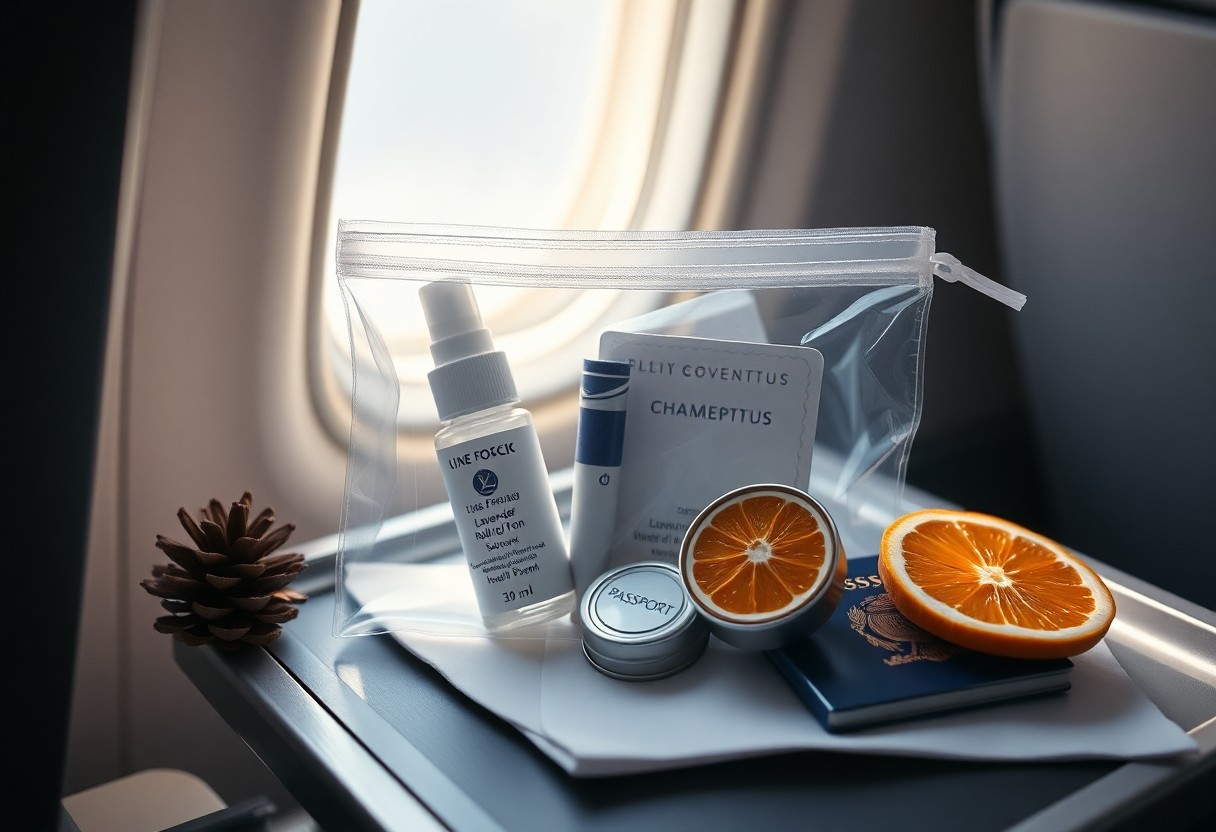
You can assemble a compact kit with targeted items-lavender inhaler, chamomile tea bags, and a tiny roller bottle-while keeping liquids to TSA’s 3.4 oz / 100 mL limit in your quart bag. Use 1-2 drops of oil on a tissue or a solid inhaler to avoid spills; avoid undiluted skin application and note that many oils are flammable, so store them capped and upright.
Calming Essential Oils
You’ll find lavender, bergamot and frankincense effective for anxiety-use a travel inhaler or a 10 mL roller diluted to 2-3% (about 12-18 drops per 30 mL) for skin-safe application. Apply to your wrists or inhale from a tissue; TSA allows these in carry-on within the 3.4 oz rule. Keep bottles sealed and cushioned to prevent leaks and fire risk.
Herbal Teas for Relaxation
You should pack chamomile, lemon balm and peppermint as single-use tea bags or 1-2 g sachets and steep for optimal effect: chamomile 5-10 minutes, lemon balm 5-7 minutes, peppermint 3-5 minutes. Use hot water from airport lounges or onboard service, choose caffeine-free blends to avoid sleep disruption, and bring a compact travel mug for comfort.
You should steep one tea bag or 1-2 g loose leaf per 8 oz (240 mL) of water for consistent results; chamomile contains the flavonoid apigenin, which has been shown to interact with GABA receptors and promote calm. Store teas in an airtight tin to prevent spills, label any herbal mixes, and check with your healthcare provider if you take sedatives or blood thinners before combining herbal remedies.
Natural Remedies for Stress Relief
When you’re short on space, prioritize compact, TSA-friendly items: a 2-3 mL lavender inhaler, single-dose chamomile tea bags, and a 10 mL roller. Consider the TSA-Accepted Calming Inahler – EZFly Essential Oil Travel … as a model for carry-on compliance; keep liquids at or below 3.4 oz / 100 mL and stored in a clear quart bag. Be aware of fragrance allergies and avoid applying concentrated oils directly to skin.
Aromatherapy Essentials
You’ll get the most effect from targeted scents: keep a pocket lavender inhaler for anxiety, a peppermint roll-on for nausea, and a solid eucalyptus balm for congestion. Dilute imperative oils to 1-2% (about 6-12 drops per 30 mL carrier) before topical use, choose non-electric inhalers or solid sticks to stay TSA-friendly, and store oils in leak-proof, labeled containers to speed security checks. Avoid undiluted application near eyes and mucous membranes to prevent irritation.
Calm-in-a-Can: Herbal Teas and Supplements
You can pack single-serve chamomile or lemon balm tea bags and travel-size tins of magnesium powder; consider L-theanine (100-200 mg) for focused calm and melatonin (0.5-3 mg) for jet-lagged sleep. Keep powders in sealed labeled packets and carry supplements in original packaging when possible for screening. Check interactions before mixing herbs with prescriptions-St. John’s wort and grapefruit can cause serious drug interactions.
Steep chamomile for 3-5 minutes and use one teabag per cup; magnesium glycinate at 100-200 mg aids relaxation with less gastrointestinal upset than citrate, while keeping melatonin to 0.5-3 mg reduces next-day grogginess. Ask flight attendants for hot water-most airlines provide it-and bring an insulated mug. Avoid combining sedative herbs or supplements with alcohol or prescription sedatives to prevent excessive drowsiness or respiratory depression.
Boosting Immunity While Traveling
When you layer immunity into your breathing kit, focus on actions that protect mucosal barriers and reduce exposure: stay hydrated, prioritize 6-8 hours of sleep when possible, and use hand washing or sanitizer after touching high-contact surfaces. Aircraft humidity often drops below 20%, which dries airway linings; combining hydration, nasal saline sprays, and a modest supplement routine helps maintain defenses during long transit.
Immune-Boosting Supplements
You can carry TSA-friendly supplements like vitamin C 500-1,000 mg daily, zinc lozenges 15 mg at symptom onset, and vitamin D 1,000-2,000 IU if you’re low on sun exposure. Add a travel probiotic (look for ≥1 billion CFU) to support gut-associated immunity. Avoid exceeding 40 mg zinc/day to prevent adverse effects and check interactions if you take prescriptions.
Foods to Pack for Resilience
Pack shelf-stable, nutrient-dense items that support immunity: single-serve nut butter, roasted chickpeas, turkey or salmon jerky, and fresh clementines or kiwis (a medium orange has ~70 mg vitamin C). Aim for snacks with ~15-30 g protein to sustain immune function and avoid risky items like raw sprouts or unpasteurized cheeses that can carry pathogens.
Use airtight single-serve packs to keep foods fresh and TSA-compliant; vacuum-packed tuna, nut butter packets, and sealed probiotic sachets travel well. Include a small ice pack in checked luggage if you bring yogurt or fresh cheese, otherwise choose shelf-stable fermented options or dried fruit for vitamin C. Rotate snacks every 2-3 days and discard any perishable item that’s been unrefrigerated over recommended times to reduce foodborne illness risk.
Breathing Exercises to Try While Traveling
When travel stress spikes, use short, repeatable breathing routines to calm your system: try box breathing (inhale 4s, hold 4s, exhale 4s, hold 4s) for 3-5 cycles or the 4-7-8 pattern for two minutes. If you want a quick demo or guided cue, follow Thursday Wellness Check ✨ Your holiday travel kit … and practice discreetly while seated or in a quiet corner.
Simple Techniques for Stress Relief
You can lower anxiety with compact techniques: alternate-nostril breathing for 5 cycles, pursed-lip exhales for 6-8 seconds, or diaphragmatic breaths (hands on belly) for 5-10 minutes. Use specific counts so you track progress, and if you feel lightheaded stop and resume normal breathing; stop if dizzy or short of breath.
When and Where to Practice
Practice while queued at security, during boarding, mid-flight at your seat, or in an airport lounge-sessions of 1-10 minutes work well depending on time. Choose a discreet posture (seated upright, feet grounded) and pair with calming scents from your TSA-friendly kit for added effect.
More practically, try a 60-90 second breathing reset when turbulence or announcements spike your stress; use noise-cancelling headphones or a low-volume guided app for privacy. Aim for consistency: a few short sessions across a travel day (for example, before security, pre-boarding, and after landing) often reduces perceived stress; keep techniques simple and repeatable so you can use them anywhere.
Staying Hydrated on Your Journey
Air travel dehydrates you quickly; cabin air often sits at 10-20% humidity, so aim to sip consistently-about 200-300 ml per hour on a flight. If you have a long-haul leg, plan to add an extra 500-1,000 ml over the trip. Bring an empty refillable bottle through security, fill it after screening, and pair fluids with the breathing kit to keep your nasal passages and throat from drying.
Importance of Hydration
Dehydration thickens mucus and can reduce mucociliary clearance, raising your chance of irritation and infection. Even a 1-2% loss of body water impairs concentration and increases fatigue, which matters when you’re navigating connections or driving after arrival. Drink more than you think if you’re on multiple flights or cross time zones to offset fluid loss and maintain the benefits of the breathing aids you packed.
Natural Hydration Options
Choose water as your base, then add options with electrolytes: coconut water (about 600 mg potassium per cup), diluted fruit juice, or low-sugar oral rehydration sachets. Herbal teas (chamomile, peppermint) are soothing and non-caffeinated, while electrolyte tablets (Nuun-style) dissolve quickly for measured sodium and potassium replacement. Avoid excess alcohol and limit strong coffee, since they can increase fluid loss.
For DIY hydration, mix 500 ml water with a squeeze of lemon, a pinch of salt, and 1 teaspoon honey for quick electrolytes and glucose-easy to prepare in airport lounges. You can also buy sealed coconut water or a low-sodium sports drink past security if you prefer ready-made options. Monitor urine color (pale straw is good) and increase intake if you’re sweating, flying overnight, or taking antihistamines that dry you out.
Creating Your Custom Breathing Kit
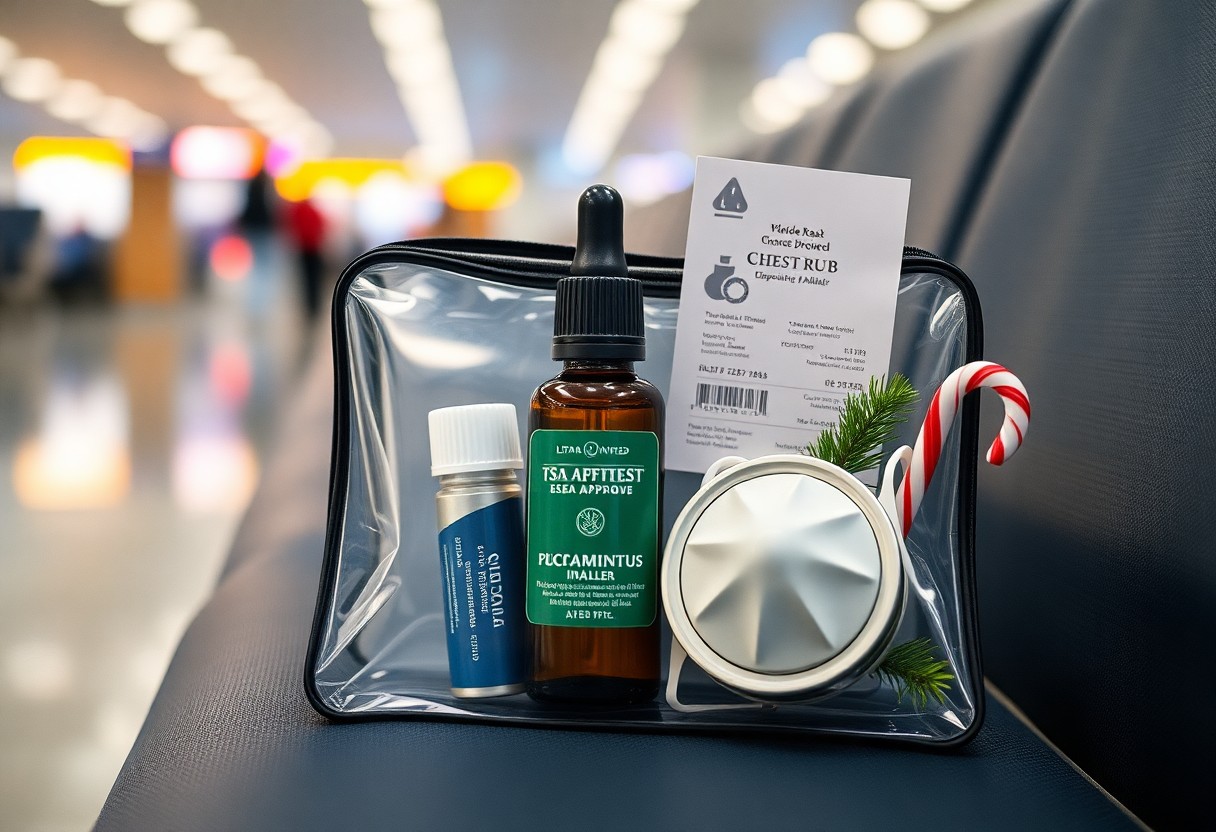
Start by listing your typical triggers, flight length, and any prescribed treatments so you pack proportionally-for example, bring a 10-30 mL saline spray for short hops and an extra 30 mL travel mist for >6-hour flights (store over-100 mL items in checked baggage). You should keep medications in original labeled containers and a printed med list, and place all liquids in a clear quart bag to streamline TSA screening. Use a compact inventory card to speed security checks and boarding.
Personalizing Your Remedies
Match scents, concentrations, and delivery methods to your needs: if menthol aggravates you, opt for eucalyptus or chamomile inhalers; if anxiety spikes, pack a labeled 5% lavender roller and a single 2-3 mg melatonin tablet only after consulting your clinician. You can swap full bottles for single-dose sachets or amber 5-10 mL vials to protect potency. Carry allergy cards stating triggers and preferred interventions so gate agents or attendants can assist quickly.
Must-Have Items for Everyone
Include a small saline spray (10-30 mL), a travel-sized hand sanitizer, a hydrating lip balm, and a compact inhaler spacer or prescription inhaler if you use one; prescription inhalers and auto-injectors like EpiPens are allowed through TSA even if >3.4 oz but must be declared. Add a 3.4 oz aromatherapy roller (lavender or peppermint) and single-use saline sachets; pack everything in a clear pouch for easy inspection.
For specifics, carry your inhaler in carry-on with prescription label and a copy of your action plan; TSA permits medically necessary liquids above 3.4 oz when declared, though agents may test them. Choose single-dose saline sachets to avoid liquid limits, use amber glass 5-10 mL vials for imperative oils to preserve aroma, and keep EpiPens accessible since immediate use is time-sensitive. Label each item clearly to avoid delays and ensure crew can help if needed.
Helpful Breathing Techniques
Use targeted breathing to reset your nervous system during delays or turbulence; aim for about 6 breaths per minute (inhale 4-5s, exhale 6-8s) and practice 3-5 minutes before boarding to increase vagal tone and often reduce anxiety within minutes. Try two short sessions on long waits or after security. If you become lightheaded or tingling occurs, stop and breathe normally-hyperventilation can cause dizziness.
Simple Breathing Exercises
Try three practical routines: box breathing (inhale 4, hold 4, exhale 4, hold 4) used by military personnel for stress control; 4-7-8 breathing (inhale 4, hold 7, exhale 8) to encourage relaxation; and diaphragmatic breathing-slow belly out/in at ~5-6s per phase to reach ~6 breaths/min. Do a 5-minute set every 45-60 minutes during travel and stop if you feel faint-slow counts help, but overdoing can cause lightheadedness.
Mindfulness for Travel Anxiety
Use brief practices to anchor attention: a 3-5 minute body scan (feet to head) or the 5-4-3-2-1 grounding (name 5 things you see, 4 you touch, 3 you hear, 2 you smell, 1 you taste) interrupts the fight-or-flight loop. Guided apps offer 3-10 minute sessions you can run discreetly on layovers or in-flight, and many travelers report noticeable calm within minutes when practiced regularly.
Follow a simple 3-minute routine: one minute of slow breathing at ~6 breaths/min (inhale 5s, exhale 5s), one minute of a head-to-toe body scan naming sensations, then one minute of the 5-4-3-2-1 grounding. Use it seated or in line; apply before boarding and again during turbulence. If deep breathing triggers panic, switch to gentle nostril breaths and sensory grounding-stop and seek help if symptoms escalate.
Keeping Your Kit Travel-Friendly
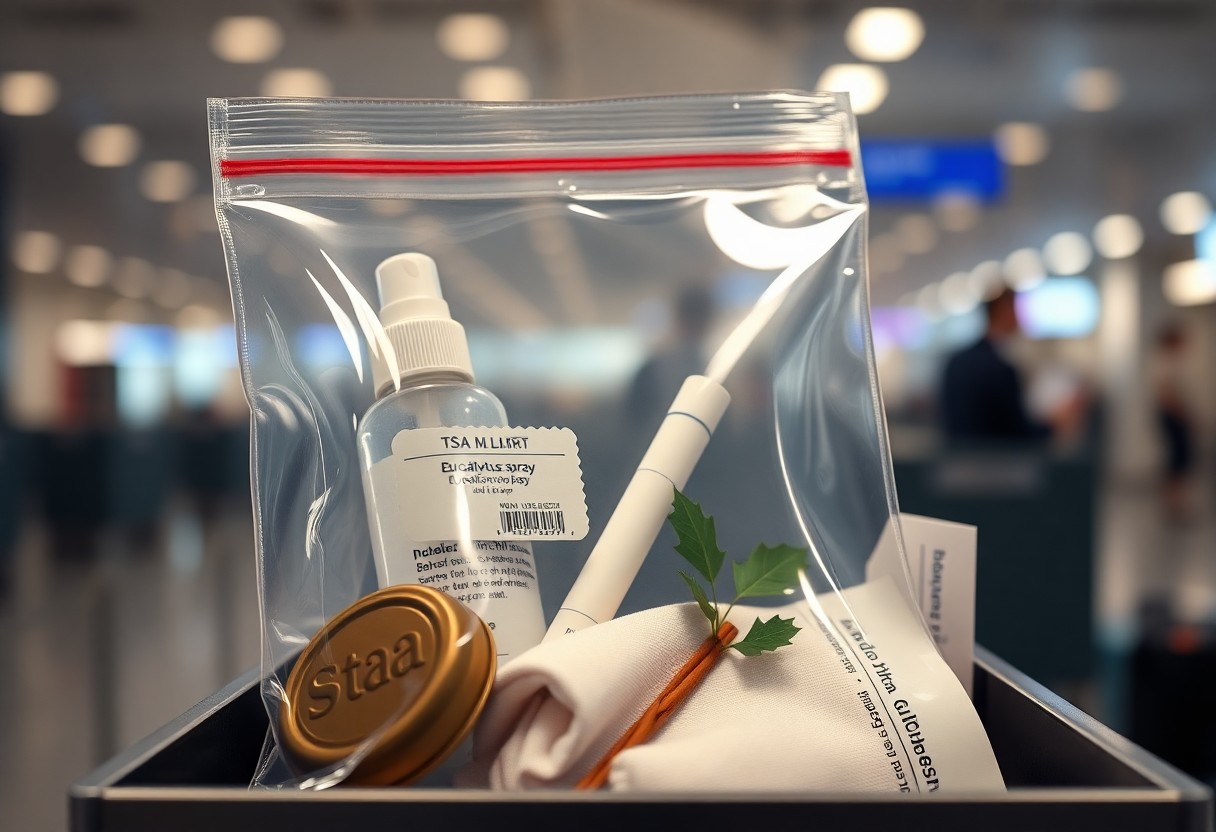
Pare down to multiuse items and choose lightweight packaging so your kit fits a carry-on or personal item; swap bulky sprays for a compact solid inhaler or aromatherapy pads. Use a clear, zip-top pouch that meets TSA visibility expectations and keep fragile items cushioned to avoid leaks or activation from pressure changes. Recognizing that smart packing reduces stress and speeds screening, place one prioritized pouch where you can reach it during the flight.
Size Limitations and Regulations
Carry-on liquids must follow the 3.4 oz / 100 mL limit and fit in a single quart-sized clear bag, while prescribed inhalers and medications are generally exempt if declared; aerosols and sprays still attract scrutiny. International carriers may enforce stricter rules-EU, UK, and some Asian airports restrict certain aerosols-so check before you fly. Recognizing the variation between airlines and countries will prevent confiscation or delays.
- 3.4 oz / 100 mL – standard carry-on liquid size
- Prescription medications – carry originals and labeling
- Aerosols & sprays – may be limited or banned on some routes
Tips for Easy Access During Flights
Stow your breathing kit in an outer carry-on pocket or a slim personal-item pouch so you can retrieve an inhaler or calming remedy within seconds; avoid checked luggage for anything you might need mid-flight. Keep crucial items like a rescue inhaler and travel-size medication in separate, clearly labeled sections to speed retrieval. Recognizing that quick access lowers anxiety, position the pouch under the seat in front of you or in your lap bag.
- Carry-on – primary location for in-flight needs
- Rescue inhaler – keep within arm’s reach
- Clear pouch – speeds security checks and access
Consider using a slim, zippered travel wallet for documents and a small, color-coded pouch for remedies so you won’t fumble during turbulence; a belt-worn or neck pouch can be helpful on long layovers. Pack backups like extra batteries separately in original packaging to avoid activation, and keep a photocopy of prescriptions and dosing instructions handy. Recognizing that organization reduces in-flight panic, rehearse your reach sequence once before boarding.
- Batteries – store separately and safely
- Backup medication – carry one extra dose in case of delays
- Prescription copy – helpful for international screening
Packing Your Travel Kit
Pack strategically so you can access calming aids during delays: keep liquids under 3.4 oz / 100 mL in a clear quart bag, place the bag near the top of your carry-on, and tuck prescription labels with items so you can show them quickly; a compact set of 6-8 pieces typically fits a small backpack and keeps your breathing aids and calming remedies within reach throughout the trip.
Essential Items to Include
Prioritize small, multi-use items you can retrieve midflight: pack a prescription inhaler in original packaging, a travel saline spray (≤100 mL), a lavender inhaler or roll-on, 4-6 chamomile tea bags, disposable masks, and a travel-size hand sanitizer-aim for 6-8 total items to stay light and TSA-compliant.
- Prescribed inhaler – keep it accessible and in original packaging.
- Saline spray – small bottle under 100 mL for nasal comfort.
- Lavender inhaler or roll-on – one to calm nerves during boarding.
- Chamomile tea bags – 4-6 for a calming cup in terminals.
- The hand sanitizer and masks stored together in the quart bag.
Organizing Tips for Easy Access
Group liquids and gels in a labeled clear quart bag and keep it at the top of your carry-on for quick removal at security; use a small zip pouch for dry items like tea and rollers, apply color-coded tabs to separate medication from aromatherapy, and place prescriptions where an agent can verify labels without unpacking everything.
- Clear quart bag for all liquids to speed through security.
- Zip pouch for dry items like teas and rollers.
- Color-coded labels or tabs to identify meds quickly.
- The prescription packet placed on top of your carry-on for easy inspection.
Use a checklist of 5-7 items and photograph your kit before travel so you can recreate it if lost; select a 6″x8″ mesh pouch under 2 oz, pack duplicates of the most-used item (for example, two small saline sprays), and store a concise medication list and receipts in the same pouch. The simplest backup is a labeled envelope with photocopies of prescriptions and a phone photo of the assembled kit.
- Checklist (5-7 items) saved on your phone and printed.
- Mesh pouch (6″x8″) lightweight and visible.
- Duplicate small saline or inhaler backup.
- The prescription copies and photo of kit stored in your pouch.
To wrap up
Conclusively the Holiday Travel Breathing Kit – TSA-approved natural remedies – helps you keep your breathing clear, soothe travel-related irritations, and stay relaxed during busy trips; with compact, carry-on friendly items you can trust, you’ll feel more comfortable navigating crowds, flights, and family visits wherever your holiday takes you.
Summing up
Ultimately, your Holiday Travel Breathing Kit – TSA-approved natural remedies – helps you breathe easier on flights and during holiday outings, blending compact aromatherapy, saline sprays, and breathing exercises to ease congestion and anxiety, so you can focus on enjoying travel, family, and festivities with more comfort and confidence.
FAQ
Q: What is included in the Holiday Travel Breathing Kit and why are the items TSA-approved?
A: The kit contains travel-sized, TSA-compliant formats so you can carry them in a plane cabin: travel saline nasal spray (≤3.4 oz/100 mL), small roll-on aromatherapy blends in 10-15 mL roller bottles, solid inhaler sticks (non-liquid), throat lozenges, a travel-size vapor rub in a stick or jar ≤3.4 oz, single-use saline packets, and a clear quart-sized resealable bag plus a small pouch. TSA rules permit liquids and gels in containers 3.4 oz/100 mL or smaller placed together in a single quart bag; solid inhalers and lozenges are allowed outside the liquid bag. Items are sized and packaged to meet those screening requirements and to minimize delays at checkpoints.
Q: How should I use the kit safely in airports and during flight?
A: Use roll-ons or inhaler sticks by applying to wrists, chest, or taking short inhalations near the nose; avoid spraying or diffusing strong scents in confined spaces to prevent bothering other passengers. Use saline spray seated upright and follow the product dosing instructions; single-use packets are hygienic for travel. Keep liquid items in the clear quart bag and present them separately at security screening. Do not apply concentrated important oils directly to skin without dilution, and avoid applying scented products near infants, elderly passengers, or people with scent sensitivities. Dispose of single-use items properly and stow the kit under the seat or in an overhead bin during takeoff and landing.
Q: Who should avoid parts of this kit or consult a clinician before use?
A: People with asthma, severe allergies, chronic respiratory conditions, pregnant or breastfeeding people, and parents of young children should check with a healthcare professional before use. Patch-test diluted oils on a small area of skin to check for irritation, and do not give important oils or certain herbal concentrates to infants or very young children. If you use prescription inhalers or oxygen, follow your clinician’s plan and the airline’s policies-this kit is supplementary, not a replacement for prescribed medical treatments. Check product expiration dates and store components in a cool, dry place; replace single-use items after opening and discard any product that changes smell, color, or consistency.

Medical Disclaimer
This article is for informational purposes only and is not a substitute for professional medical advice, diagnosis, or treatment. Always consult a qualified healthcare provider before starting, stopping, or changing any treatment, especially if you are pregnant, nursing, have a medical condition, or are taking medications. Never disregard professional medical advice or delay seeking it because of something you have read here. If you experience severe symptoms, allergic reactions, or think you may have a medical emergency, seek immediate care.
