
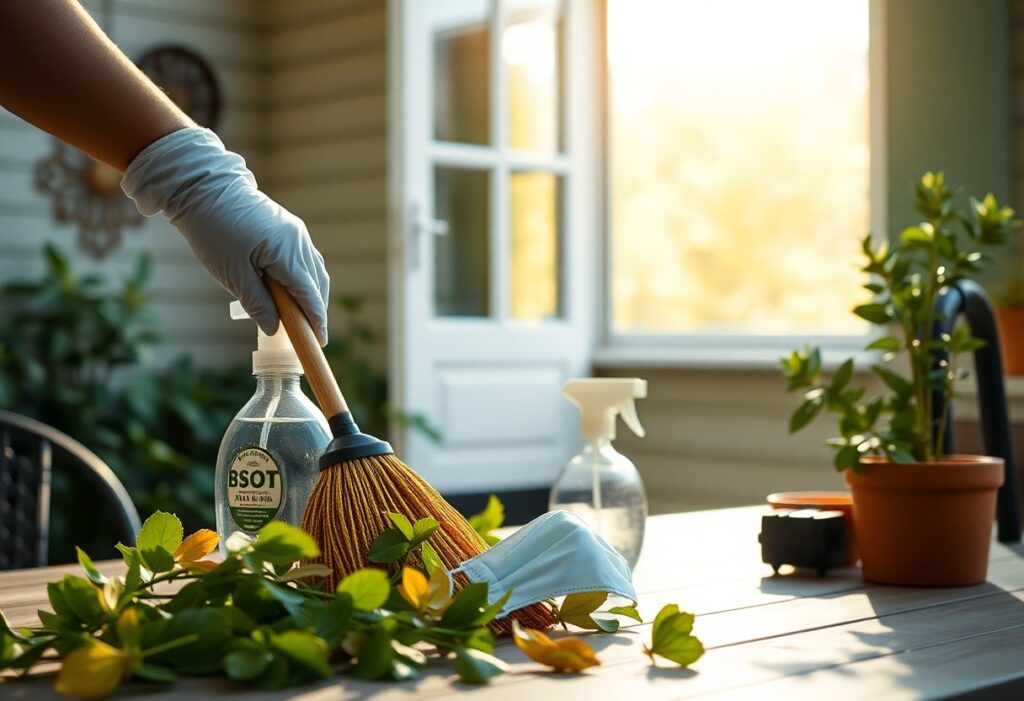
Many people rush spring cleaning and expose themselves to harsh fumes, but you can protect your lungs by choosing natural, non-toxic cleaners, opening windows for better ventilation, wearing a comfortable mask, and using gloves to avoid skin irritation; simple swaps like vinegar, baking soda, and important oil blends help you clean effectively while keeping indoor air safe and fresh.
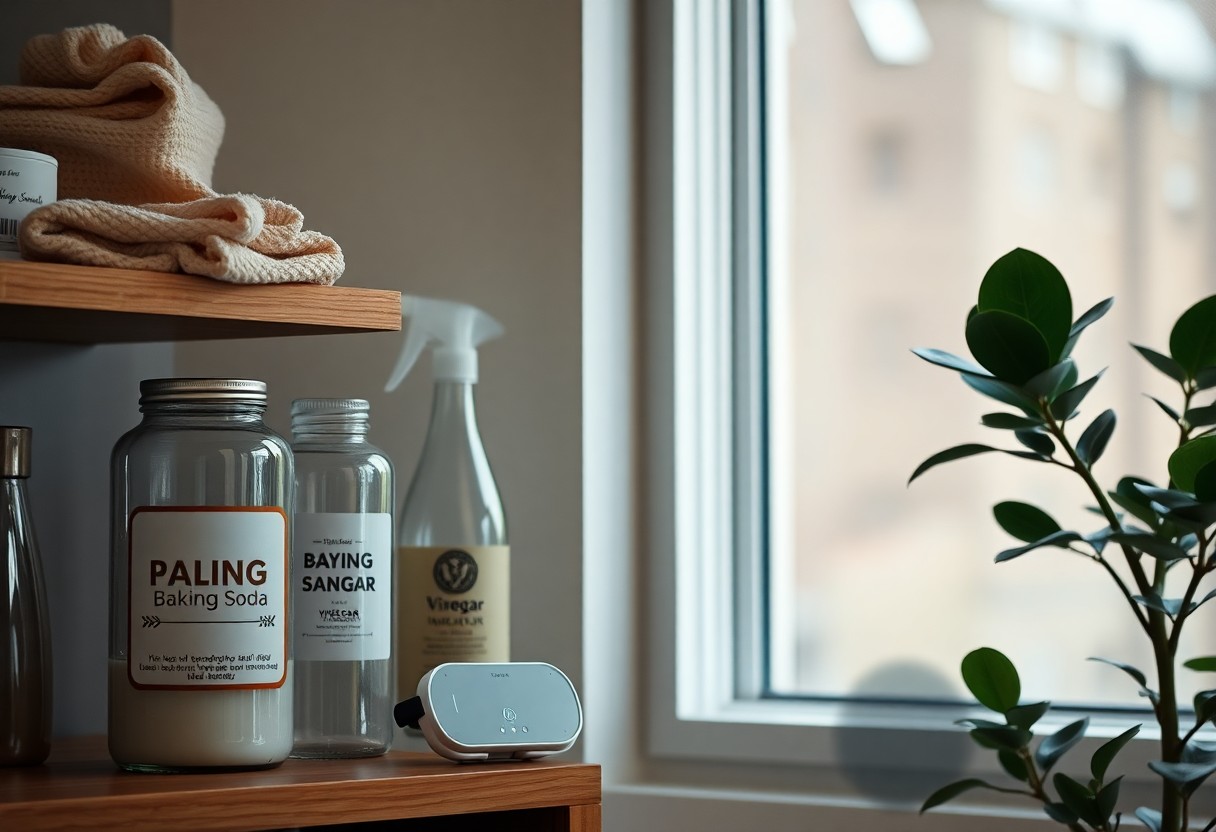
Understanding Allergens
When you dig into seasonal chores, specific particles trigger the symptoms you want to avoid: pollen, mold spores, dust mites, and Pet dander. Tree pollen peaks in spring, grass follows, and each species can dominate for 4-6 weeks. About 10-30% of people experience allergic rhinitis, and washing bedding at 60°C kills dust mites-simple steps that cut exposure while you clean.
Common Spring Allergens
Pollen from trees (early spring), grasses (late spring), and weeds (summer) is the leading outdoor trigger; daily counts can range from a few dozen to several hundred grains per cubic meter. Indoors, mold grows in damp basements, dust mites thrive above 50% humidity in bedding, and pet dander can linger for months in fabrics-target these hotspots when you clean.
How Allergens Affect Breathing
Allergens provoke an immune response: your body releases histamine and inflammatory mediators that cause sneezing, congestion, coughing, and airway narrowing. You may experience allergic rhinitis (affecting about 10-30% of adults); if you have asthma, the same exposure can trigger bronchospasm and increase exacerbations-so reducing airborne particles protects your breathing.
Particle size determines where allergens hit: pollen grains are typically 10-100 μm and mainly irritate the nose, while mold spores and small particles (<10 μm, PM10) can reach lower airways and worsen asthma. You’ll often see symptoms spike on high-pollen days or after vacuuming without a HEPA filter; HEPA filters remove 99.97% of 0.3 μm particles, cutting indoor exposure and often reducing medication need.
Natural Cleaning Solutions
When you swap harsh chemicals for simple ingredients, you cut indoor irritants; the EPA notes indoor pollutant levels can be 2-5 times higher than outdoors. Use vinegar, baking soda, 3% hydrogen peroxide and lemon for grease, odors and mild stains. Avoid aerosol sprays and do not mix cleaners that release toxic fumes. For practical step-by-step advice see Spring Cleaning Tips for a Healthier Home.
DIY Cleaners You Can Make at Home
You can make an all-purpose spray with 1 cup water, 1 cup white vinegar and 1 tablespoon castile soap; shake before use. When disinfecting, spray 3% hydrogen peroxide and let sit 1 minute. Mix a scouring paste of 3 parts baking soda to 1 part water for ovens and tubs. Never mix vinegar or hydrogen peroxide with bleach or ammonia – that combination produces dangerous gases.
Eco-Friendly Products to Try
You should pick products labeled fragrance-free, low-VOC or bearing seals like EPA Safer Choice, Green Seal or the Asthma & Allergy Friendly mark. Favor concentrated formulas and refill pouches to cut packaging waste, and avoid products that list vague “fragrance” ingredients which frequently trigger symptoms.
Check active ingredients and required wet-contact times-many disinfectants need 1-10 minutes to work. Before you clean whole rooms, test a small area for odor or irritation and use unscented cleaners with simple lists (water, soap, citric acid, sodium bicarbonate) if you are sensitive. Choosing concentrates can also reduce plastic use and often saves over 30-50% per use compared with single-use bottles.
Preparing Your Home for Spring
Start by mapping high-traffic and dust-prone zones-closets, curtains, and under beds-and schedule 2-3 hours per room to sort items into keep, donate, and trash piles. You should seal seasonal clothing in airtight bins and swap washable textiles to reduce allergens; use damp microfiber cloths to trap dust instead of stirring it up. Assume that tackling hotspots first cuts airborne particles and makes subsequent cleaning safer for your lungs.
Decluttering for Easy Breathing
Focus on fabrics and paper that trap allergens: cushions, books, stuffed toys, and stacks of mail. You can wash bedding at 60°C (140°F) to kill dust mites, launder curtains seasonally, and vacuum with a HEPA vacuum-these steps remove microscopic irritants; donate or discard items within 30-60 days to avoid re-cluttering. Assume that a streamlined home reduces places for mold and dust to accumulate, improving indoor air quality quickly.
- dust mites
- HEPA vacuum
- wash at 60°C
- donate 30-60 days
Ventilation Tips for Fresh Air
Open windows on opposite sides for 10-15 minutes twice daily to create cross-ventilation and run kitchen or bathroom exhaust fans while cleaning to expel fumes and moisture. You should operate a portable HEPA air purifier near the cleaning area-HEPA captures 99.97% of 0.3 μm particles-and avoid mixing products that emit VOCs. Assume that sustained airflow prevents pollutant buildup and lowers immediate exposure during spring tasks.
- cross-ventilation
- HEPA air purifier
- VOCs
- exhaust fans
When you need more control, aim for a few targeted air changes: run a window fan facing out and open a second window as intake to boost exchange, or run purifiers at high for 30-60 minutes after dusty work. You can also monitor CO2 to gauge ventilation-keeping levels under about 1,000 ppm suggests adequate fresh air-and prefer water-based, low-odor cleaners to limit contaminants. Assume that combining mechanical and natural ventilation gives the best short-term relief.
- window fan out
- air changes
- CO2 under 1,000 ppm
- low-odor cleaners
Allergy-Proofing Your Space
If you focus on targeted, practical changes you can cut allergen loads dramatically: seal gaps around windows, swap heavy drapes for washable blinds, and use allergen-proof mattress and pillow covers. Aim to keep humidity at 30-50% because dust mites and mold spores spike above 50%. You should plan weekly bedding washes, vacuum high-traffic zones 2-3 times weekly, and store rarely used items in sealed bins to limit settled dust and pet dander.
Improving Air Quality
You can improve airborne safety by pairing ventilation with filtration: choose a HEPA air purifier rated for your room size-HEPA captures 99.97% of particles ≥0.3 μm-and run it during and for 1-2 hours after cleaning. Upgrade HVAC filters to MERV 11-13 if compatible, change them monthly during peak allergy season, and avoid ozone-generating devices and high-VOC cleaners since those can aggravate breathing issues.
Regular Maintenance and Cleaning
You should vacuum with a HEPA-equipped vacuum 2-3 times weekly in busy rooms, launder bedding weekly in hot water (≥54°C/130°F) to reduce dust mites, and wash curtains or machine-washable upholstery every 4-8 weeks. Replace pillows every 2 years, deep-clean carpets every 6-12 months, and check vents and dryer ducts monthly to prevent dust buildup and mold growth.
For deeper impact, schedule a monthly checklist: 15-20 minutes per room to vacuum, dust with microfiber, and wipe high-touch surfaces with fragrance- and VOC-free cleaners; steam or shampoo rugs annually; run a dehumidifier to maintain 35-50% relative humidity; and address any water leaks immediately since mold can begin growing within 24-48 hours, increasing allergen and mycotoxin risks.
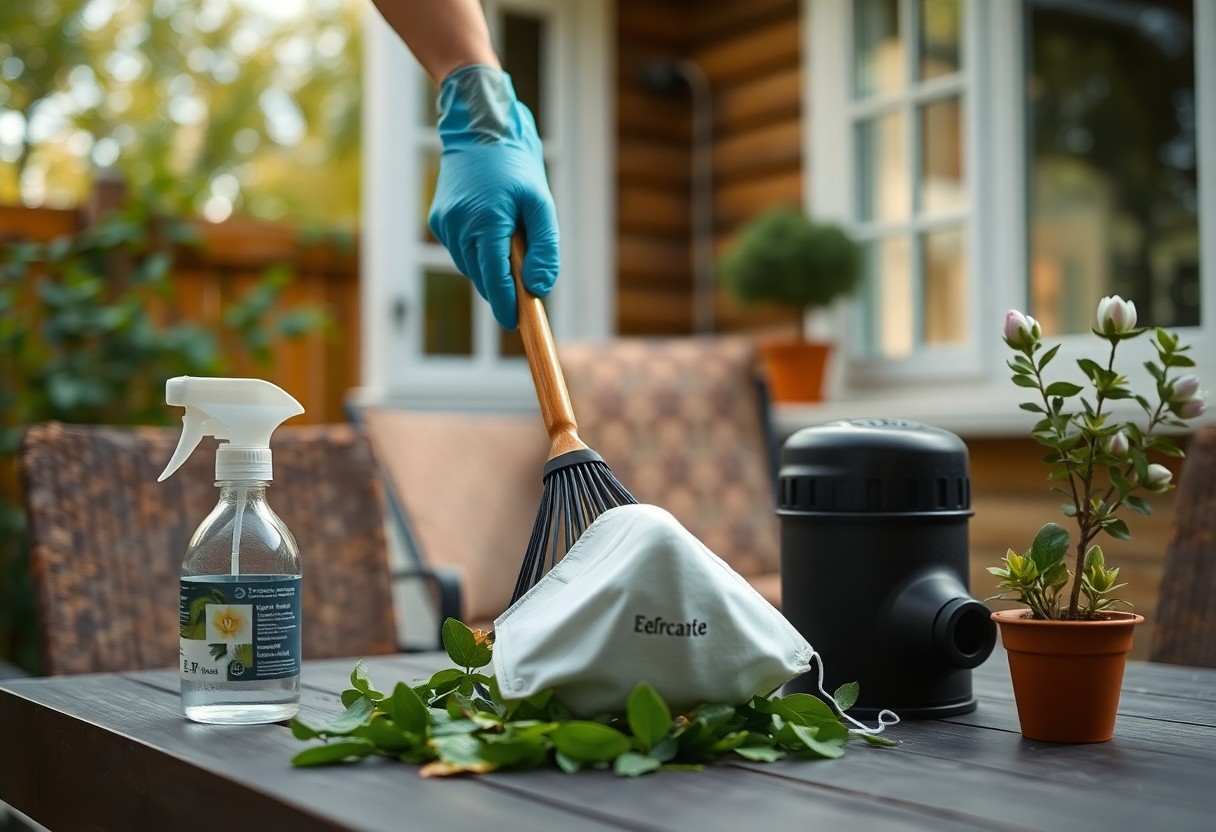
Tips for Outdoor Spring Cleaning
When you tackle yard work, schedule tasks for early morning or just after rain to avoid peak pollen – grass pollen often surges midday and can reach thousands of grains per cubic meter; wet leaves and mulch before moving them to cut dust and spore release, and limit sessions to 30-60 minutes with indoor breaks to reduce exposure. Any debris you move should be dampened to limit airborne particles.
- pollen
- mold spores
- dust masks
- gloves
- HEPA filters
Protecting Yourself While Cleaning
Wear an N95 or P100 respirator-N95 filters ≥95% of particles ≥0.3 μm-along with sealed goggles and long sleeves; change gloves often when handling compost or mulch to avoid skin transfer of mold spores. Break tasks into 20-30 minute segments and step inside between rounds; studies show shorter, intermittent exposure lowers symptom severity in people with allergies.
Best Practices for Outdoor Allergies
Check local pollen counts before you start-if counts exceed 50-100 grains/m3, favor light-duty tasks or postpone; shower and change clothes within 15-20 minutes after outdoor work to remove pollen, and run a HEPA air purifier indoors since HEPA filters trap ~99.97% of particles ≥0.3 μm to reduce indoor pollen levels.
Plan work for damp conditions, mow when grass is wet and avoid midday (typically 10:00-16:00) when pollen peaks; use a mulching mower to minimize airborne clippings. If symptoms persist despite these steps, a daily non-sedating antihistamine (e.g., cetirizine 10 mg) or an intranasal corticosteroid often reduces reactions-start treatment before peak exposure and consult your clinician for personalized adjustments, especially if you have asthma or severe allergies.
Nourishing Your Body During Spring Cleaning
As you move from room to room, fuel your body with balanced, nutrient-dense choices so energy stays steady and lungs stay clear; aim for 20-30 g protein per meal (eggs, Greek yogurt, legumes), pair with whole grains for sustained glucose, and add leafy greens or berries for antioxidants that reduce inflammation during heavy dust exposure.
Foods to Boost Immunity
You can boost defenses with specific foods: one medium orange provides ~70 mg vitamin C, red bell peppers and kiwi add more, zinc-rich options like pumpkin seeds or 3-4 oysters supply 8-11 mg, and fermented foods (yogurt, kefir, sauerkraut) deliver probiotics that support respiratory immunity.
Staying Hydrated
While cleaning, target 8-10 cups (2-2.5 L) of plain water during active periods and a total daily intake of ~2.7 L (women) to 3.7 L (men) including food; avoid alcohol and excess caffeine since they can increase mucus and worsen shortness of breath.
Practical tips: carry a 1 L bottle, sip every 15-20 minutes, and replace lost electrolytes if you sweat heavily-mix water with 1/4 tsp salt and a squeeze of lemon or use coconut water; signs you need fluids include dark urine, dizziness, or fatigue, and you may lose 0.5-1 L per hour in intense yard work, so rehydrate accordingly.
To wrap up
Now you can finish spring cleaning without worrying about air irritants by using simple natural cleaners, airing rooms, wet-dusting, wearing a comfortable mask when needed, and running a HEPA filter; these easy steps help protect your lungs, keep your home fresh, and let you enjoy the season with less sneezing and more calm.
FAQ
Q: How can I reduce airborne allergens and dust while spring cleaning to avoid breathing problems?
A: Start by minimizing dust disturbance: dust from top to bottom using damp microfiber cloths, avoid dry dusting or sweeping, and use a vacuum with a true HEPA filter (or a new high-efficiency bag) for carpets, upholstery, and mattress surfaces. Dampen mop heads and clean hard floors rather than sweeping. Ventilate by opening windows when outdoor pollen counts are low (early morning or after rain) or run exhaust fans and a portable HEPA air purifier during cleaning. Replace or upgrade HVAC filters (aim for MERV 8-13 compatible with your system) and change them after heavy cleaning. Remove or launder textiles (curtains, bedding, throw rugs) in hot water if tolerated, and keep pets out of the room while cleaning and until air clears. Limit use of anything that produces fine particles or aerosols (dry powders, aerosol sprays, scented plug-ins).
Q: What natural cleaners and techniques are safe for people with asthma or chemical sensitivities?
A: Use simple, low-odor solutions: diluted white vinegar (50/50 with water) for general surface cleaning, baking soda as a gentle abrasive for sinks and ovens, and unscented castile soap for grease and general washing. Use 3% hydrogen peroxide as a disinfectant on nonporous surfaces-apply, let sit a minute, then wipe. Do not mix vinegar or hydrogen peroxide with bleach or ammonia. Avoid fragranced products, important oils, and strong citrus concentrates if sensitivities exist; test any new cleaner on a small area first. Use microfiber cloths and steam cleaners (steam kills dust mites and mold spores without chemicals) for fabrics and hard surfaces. Wear nitrile or latex-free gloves if skin sensitivity is an issue and ensure good ventilation during and after cleaning.
Q: How can I protect a household member with breathing issues before, during, and after cleaning?
A: Plan cleaning when the person with breathing issues can leave the home or stay in a closed room with the door sealed and a running HEPA air purifier. Have them wear a well-fitting N95/FFP2 respirator if they must be present during dusty tasks. Close doors to their bedroom and run a purifier there; wash bedding frequently and avoid bringing cleaned fabrics into their room until dust has settled and air has been cleared. After cleaning, ventilate thoroughly for at least 30-60 minutes and run the HVAC or a HEPA purifier for several hours. Control humidity to 30-50% to discourage mold growth, and follow up with routine maintenance (regular vacuuming with HEPA, filter changes, and targeted spot-cleaning) to minimize the need for heavy, disruptive cleaning sessions.

Medical Disclaimer
This article is for informational purposes only and is not a substitute for professional medical advice, diagnosis, or treatment. Always consult a qualified healthcare provider before starting, stopping, or changing any treatment, especially if you are pregnant, nursing, have a medical condition, or are taking medications. Never disregard professional medical advice or delay seeking it because of something you have read here. If you experience severe symptoms, allergic reactions, or think you may have a medical emergency, seek immediate care.
