
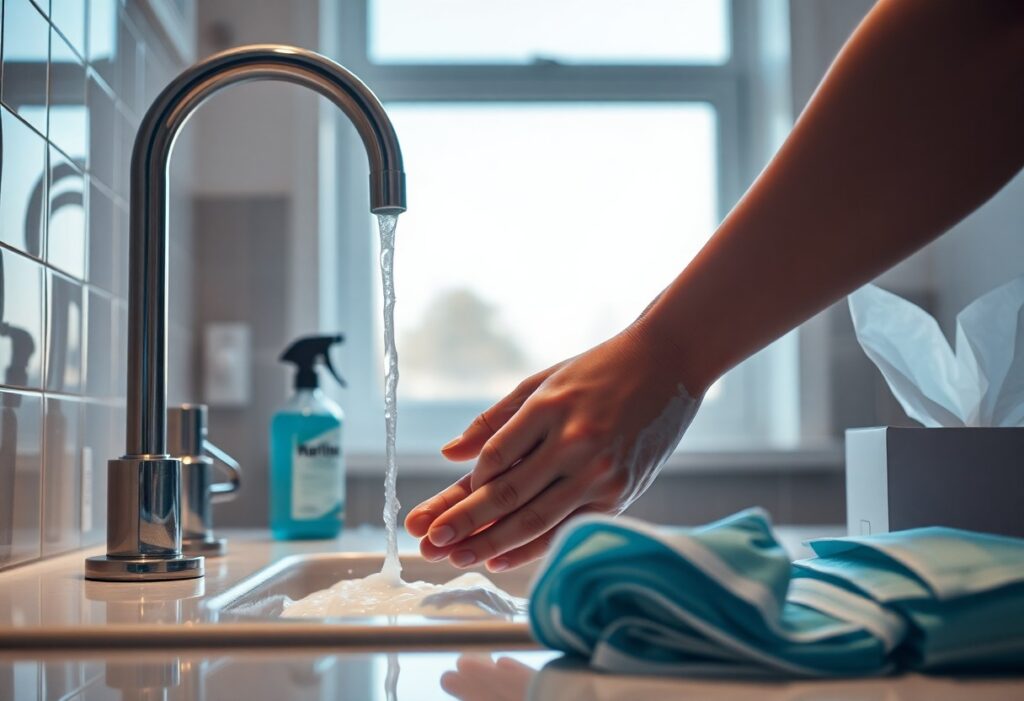
Just wash your hands often, cover coughs, clean shared surfaces, air rooms, and keep sick family members apart to help you stop colds from spreading at home.
Understanding the factors behind germ spread
Factors like airflow, close contact, and shared items increase how easily colds move through your home. Any action you take-ventilating rooms, keeping distance, or limiting shared objects-lowers the odds of passing germs to others.
- Airflow
- Close contact
- Shared surfaces
How viruses travel through the air
Airborne droplets and tiny aerosols can linger in rooms, so you may inhale particles minutes after someone coughs; improving ventilation and using masks cut your exposure and reduce the chance you spread the virus.
Why common surfaces are risky touchpoints
Surfaces like doorknobs, remotes, and counters collect droplets, and when you touch them then your face, germs transfer easily, so frequent cleaning and mindful hand use lower how often you pick up viruses.
Cleaning high-touch items regularly matters because viruses can survive hours to days on plastic and metal; focus on phones, handles, switches, and shared dishes, use EPA-approved disinfectants or soap and water, and wash your hands after handling shared objects to stop transfer to your face.
Simple tips for better hand hygiene
Practice quick, effective habits: wash your hands often, avoid touching your face, and clean high-touch surfaces daily. Assume that everyone in your household follows these simple steps to reduce spread.
- Wash for 20 seconds
- Use sanitizer when soap is unavailable
- Keep tissues and wipes handy
How to wash your hands effectively
Wet your hands, lather with soap for at least 20 seconds, scrub palms, backs, between fingers and under nails, rinse well, and dry with a clean towel or air dryer.
Choosing the right sanitizers for the family
Choose hand sanitizers with at least 60% alcohol, place child-safe pump dispensers in key areas, and use them when soap and water aren’t available.
Look for formulations without added fragrances or harsh chemicals if someone has sensitive skin, and supervise young children using sanitizer to prevent accidental ingestion.
How to disinfect your home hotspots
Wipe down frequently touched surfaces daily with EPA-approved disinfectant or diluted bleach; you should focus on phones, remotes, switches, and counters to cut cold spread.
Identifying high-touch areas like doorknobs
Check doorknobs, faucet handles, light switches, and shared devices; you can wipe them after visitors or when someone is ill using disinfectant wipes or spray.
Safe cleaning routines for shared spaces
Set a simple schedule for the kitchen, bathroom, and living room so you and others clean high-touch spots daily; label supplies and wear gloves if you prefer.
Assign clear roles so you know who cleans shared spaces, keep disinfectant, cloths, and hand sanitizer accessible, ventilate rooms while cleaning, and launder towels and soft items regularly at hot settings to reduce germs.
Setting up a comfortable recovery zone
Create a quiet, well-ventilated recovery zone with tissues, trash, fluids, and a phone; follow advice like Preventing Spread of Respiratory Viruses When You’re Sick to limit spread and keep necessarys within reach so you avoid moving through the house unnecessarily.
How to designate a “sick room” for isolation
Pick a single bedroom for isolation, place clean linens, hand sanitizer, tissues, and a trash bin, and ask others to avoid entering; keep the door closed and use video or calls for check-ins.
Managing shared bathrooms safely
Keep shared bathrooms ventilated, wipe surfaces after each use, and leave fresh towels for the sick person; ask others to schedule exclusive use when possible.
Use exhaust fans or open a window while the sick person uses the bathroom to reduce airborne particles and let surfaces dry. Wipe faucets, doorknobs, and counters with a disinfectant after each use, using disposable wipes or a dedicated cloth you wash on hot. Wear a mask if you must assist, wash your hands thoroughly, and store toothbrushes and towels separately to prevent cross-contamination.
Improving air quality factors at home
Keep windows open when weather allows to let fresh air dilute airborne viruses and reduce transmission. Use exhaust fans and whole-house ventilation if available. Assume that small, frequent air exchanges lower household risk and help protect family members.
- Run kitchen and bathroom fans during and after use to move air outside.
- Limit crowded, poorly ventilated gatherings and increase air changes in shared spaces.
Why ventilation helps clear out germs
Opening windows and running fans helps push contaminated air outside and brings in cleaner air, lowering virus concentration. You support fast removal of droplets and aerosols by increasing air changes per hour.
Using air purifiers and humidifiers correctly
Place HEPA purifiers in high-traffic rooms, set them to the recommended CADR, and run continuously while someone is sick. Adjust humidifiers to keep relative humidity around 40-50% to reduce viral survival.
Follow filter replacement schedules, position purifiers with unobstructed airflow, and match humidifier size to room area. You should avoid over-humidifying which can encourage mold; use a hygrometer to monitor levels.
Daily habits for a germ-free household
Keep high-touch surfaces wiped daily, open windows when you can, and wash your hands often to limit germs spreading between household members.
Tips for teaching kids healthy habits
Teach your children simple routines: sing while washing hands, cover coughs with their elbow, and avoid sharing cups. Any short routines and praise help those habits stick.
- Practice handwashing with a 20-second song
- Show how to cough into the elbow
- Keep labeled spare cups and utensils
Boosting immunity with rest and hydration
Sleep and steady hydration strengthen your immune response; aim for consistent bedtimes and sip water throughout the day to aid recovery.
Focus on making rest and fluids part of your daily routine: aim for appropriate sleep for each family member, set calming pre-bed rituals, and keep water accessible. Offer light, nourishing foods like soups and fruit while avoiding heavy alcohol or excess caffeine that can disrupt sleep; these steps shorten symptoms and help everyone recover faster.

To wrap up
Conclusively you can stop colds at home by isolating sick household members, wearing masks, washing hands often, disinfecting high-touch surfaces, using tissues, improving ventilation, and staying home until symptoms ease; these simple habits cut transmission and protect everyone.

Medical Disclaimer
This article is for informational purposes only and is not a substitute for professional medical advice, diagnosis, or treatment. Always consult a qualified healthcare provider before starting, stopping, or changing any treatment, especially if you are pregnant, nursing, have a medical condition, or are taking medications. Never disregard professional medical advice or delay seeking it because of something you have read here. If you experience severe symptoms, allergic reactions, or think you may have a medical emergency, seek immediate care.
