
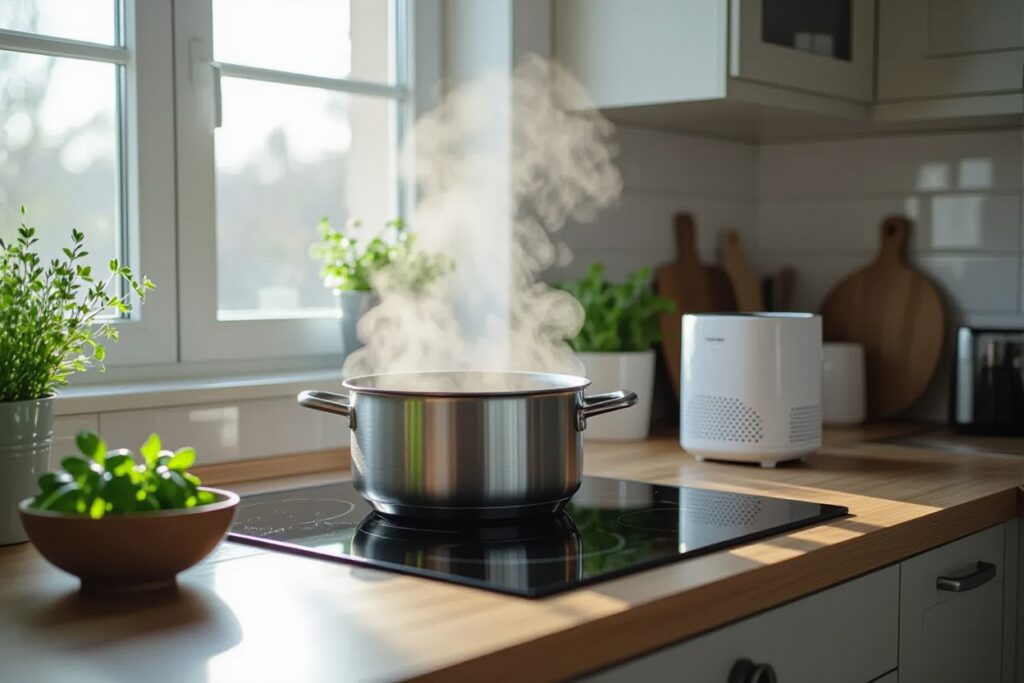
Relief comes when you reduce cooking fumes with easy habits that protect your breathing: open windows, run a vent hood, cook with lids, and limit oil smoke. Try a HEPA kitchen air purifier or an activated-charcoal filter and check “best picks” here https://amzn.to/3KT6aCb for tools that suit your space. Use gentle cleaners and houseplants to freshen air. Medical disclaimer: This information is not medical advice; if your breathing problems persist seek care from a healthcare professional.
Understanding Cooking Fumes
When you cook, especially at high heat, the air fills with a mix of particles and gases—PM2.5, ultrafine particles, NO2 and VOCs—that can spike indoors within minutes; for example, frying often pushes PM2.5 well above WHO short-term guidance. You may smell smoke or oil, yet many harmful particles stay invisible. Short-term exposures trigger irritation and wheeze, while repeated exposure over months to years has measurable impacts on lung function in population studies.
What Are Cooking Fumes?
They’re a complex cocktail from oil pyrolysis, burned food, and fuel combustion: ultrafine particles (<0.1 μm), PM2.5, aldehydes (like formaldehyde), polycyclic aromatic hydrocarbons and nitrogen dioxide from gas stoves. You'll get more of these when you deep-fry, char, or cook at temps above an oil's smoke point, and even toasting or broiling can release significant VOCs into your kitchen air.
Health Risks Associated with Cooking Fumes
You face both immediate and long-term risks: short-term spikes cause eye and throat irritation, cough, and asthma flares, and epidemiological studies link chronic exposure to higher rates of chronic bronchitis and reduced lung function. For example, NO2 from gas cooking can exceed the WHO 1-hour guideline (200 µg/m³) during use, which is associated with worsening respiratory symptoms in sensitive people.
Vulnerable groups—children, people with asthma, older adults—show the strongest effects in studies; occupational research on commercial cooks finds higher COPD and symptom rates with frequent high-heat frying. Practical mitigation matters: “ventilation makes a big difference,” and pairing source capture hoods with an air cleaner can reduce PM2.5 sharply (see an example unit: https://amzn.to/3KT6aCb).
Medical disclaimer: This information is educational and not a substitute for professional medical advice. If you have breathing problems or suspect significant exposure, consult your healthcare provider for personalized evaluation and treatment.
Identifying Breathing Issues
You notice tightness, cough, or wheeze during or after cooking; indoor spikes of PM2.5 and NO2—often above 300 µg/m3 during frying—can inflame airways. A clear summary of mechanisms is available: Here’s How Cooking Fumes Can Harm Your Health. Watch timing (symptoms within minutes) and context (poor ventilation, gas stoves). “Even brief exposure can trigger symptoms in sensitive people,” as multiple case reports show.
Common Symptoms
You may get coughing, throat irritation, watery eyes, wheeze, or shortness of breath. Symptoms usually begin within minutes of high-heat frying or grilling because ultrafine particles (<100 nm) and NO2 irritate mucous membranes. For example, household monitoring often detects PM2.5 spikes above 300 µg/m3 during stir-frying, correlating with immediate eye and throat irritation.
Long-term Effects
Over months to years, repeated exposure can increase your risk of chronic bronchitis, reduced lung function and higher COPD likelihood; the WHO recommends annual PM2.5 ≤5 µg/m3 since long-term pollution elevates respiratory and cardiovascular risk. Cohort studies link regular indoor cooking emissions to measurable declines in FEV1 and more respiratory medication use.
Vulnerable people—children, older adults, and those with asthma—experience the largest declines; one household study tied frequent high-heat frying to doubled reports of persistent wheeze in kids. You can mitigate risk by running a venting range hood, opening windows, and using a HEPA plus activated-carbon air purifier; “I cut irritation by using a hood plus a HEPA purifier” (recommended purifier).
Medical disclaimer: This information is educational and not medical advice. If you have breathing problems, consult your healthcare provider for personalized diagnosis and treatment.
Natural Remedies for Relief
When fumes irritate your airways, use targeted, practical steps: steam inhalation for 10 minutes over simmering water, a 240 mL saline nasal rinse, running a HEPA purifier for 30–60 minutes after cooking, and opening windows for cross-ventilation for 5–10 minutes to lower particulate load quickly.
Essential Oils
You can diffuse 2–3 drops of eucalyptus or peppermint oil for 15–20 minutes to ease congestion, and add 2 drops of lavender to reduce throat irritation; “try a compact diffuser like this for quick relief: https://amzn.to/3KT6aCb” Avoid undiluted topical application and skip oils that trigger your asthma.
Herbal Solutions
You can sip warm ginger or chamomile tea (1–2 cups daily) to soothe irritation and drink thyme or oregano infusions to support mucus loosening; for steam, use 1 tablespoon dried herb per liter of water and inhale for 5–10 minutes, repeating 1–2 times a day.
Steep 1 teaspoon dried thyme (or 1 tablespoon fresh) per cup of boiling water, cover and steep 5–10 minutes, then inhale steam or drink up to 3 cups daily; thymol in thyme has mild antiseptic properties. You should dilute concentrated extracts (1 drop per 5 mL carrier) and avoid strong herbs if pregnant, hypertensive, or pollen-allergic; seek medical care if wheeze or worsening symptoms occur after 48–72 hours.
Medical disclaimer: This information is not medical advice. If you have asthma, COPD, severe allergies, or worsening breathing, contact your healthcare provider before trying remedies and seek emergency care for severe shortness of breath.
Maintaining Indoor Air Quality
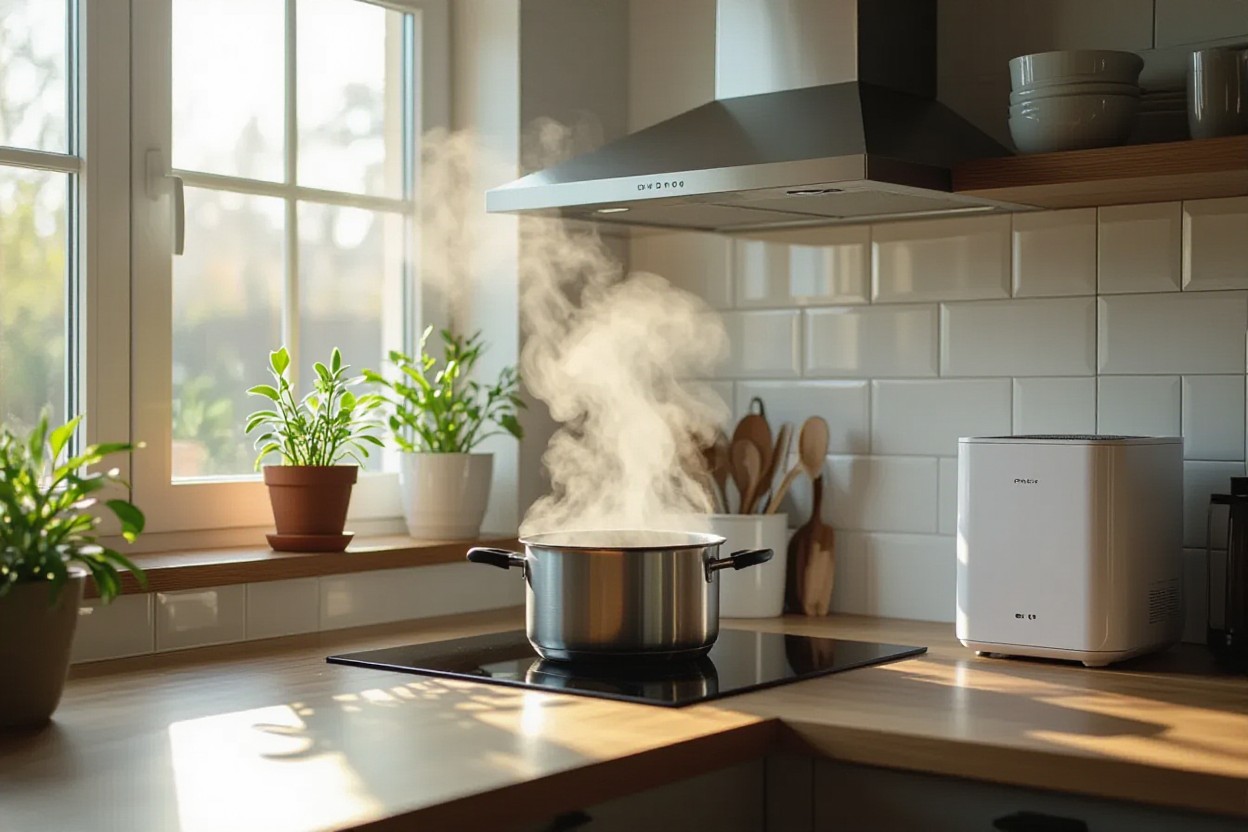
You can lower cooking-related irritants by combining ventilation, source control, and air cleaning: aim for 4–6 air changes per hour in active kitchens, run a hood rated 300+ CFM during frying, wipe oil splatters within 10 minutes to limit secondary particles, and use a HEPA unit for persistent fine PM.
Ventilation Tips
Optimize airflow when you cook: run your hood on high, open windows to create cross-ventilation, and use exhaust fans to move pollutants outside. Consider a HEPA purifier for persistent odors; models capture 99.97% of 0.3 µm particles — see “popular HEPA options” at https://amzn.to/3KT6aCb.
- Turn the hood on 1–2 minutes before heating and leave it 10–15 minutes after.
- Place a window fan blowing out and another blowing in to create a cross-breeze, aiming for 50–150 CFM of measured airflow.
- This combination can cut peak PM2.5 by 40–60% within 20–30 minutes in a typical kitchen.
Using Houseplants
You can add plants like spider plant, pothos, and peace lily to absorb some VOCs and improve humidity; the 1989 NASA study showed potted plants removed benzene and formaldehyde in sealed chambers, but realistic rooms need dozens of specimens to match mechanical filtration.
In practice, treat plants as a supplemental measure: place 3–6 medium pots near the stove and dining area for modest gains, keep soil dry enough to avoid mold, and combine with a 3–5 air-change-per-hour strategy; studies estimate plant setups reduce VOCs by only about 10–20% in real rooms, so pair them with a 300–500 CFM hood or HEPA purifier for measurable results.
Medical disclaimer: This information is not medical advice; consult your healthcare provider if you have asthma, COPD, or persistent breathing problems.
Prevention Strategies
Ventilate aggressively: run a range hood rated 300+ CFM while cooking and leave it on 5–10 minutes after, since PM2.5 can spike 2–10× during frying. Use a HEPA air purifier (HEPA filters trap >99.97% of particles ≥0.3 µm) if you lack strong ventilation. Lower heat when possible, cover pans to cut aerosol release, and swap deep-frying for oven roasting or steaming to cut fumes and NO2 exposure indoors.
Cooking Techniques
Use oils with high smoke points—avocado ~270°C (520°F), refined olive ~240°C (464°F)—and preheat pans briefly to avoid prolonged smoking. Stir-fry fast (under 5 minutes) to limit particulate generation, and place lids or splatter screens to trap droplets. “If you can see smoke, it’s too hot” is a practical rule that helps you dial back heat before coatings or oil begin to break down.
Choosing Safe Cookware
Prefer stainless steel, cast iron, enamel-coated or fully ceramic pans for high-heat work; avoid heating nonstick coatings above ~260–300°C (500–572°F) and replace scratched nonstick surfaces. You can also opt for heavy-gauge cookware that heats evenly to reduce hotspots that accelerate coating breakdown and oil smoking.
Cast iron holds heat for searing and releases fewer volatiles when well-seasoned, while stainless steel excels for browning and deglazing without coating degradation. Ceramic or enamel provide inert surfaces for low- to medium-heat cooking but may chip if dropped. If you want a tested all-purpose set, consider reputable stainless or enamel options—see examples here: https://amzn.to/3KT6aCb —and swap damaged pans promptly to avoid increased emissions from flaking or overheated coatings.
Medical disclaimer: This information is educational and not medical advice. Consult a healthcare professional if you experience breathing problems or suspect exposure-related symptoms.
When to Seek Medical Advice
If symptoms last more than 48 hours or get worse after cooking-fume exposure, contact a healthcare provider; high fever (>38°C), New chest pain, severe breathlessness, or fainting need prompt evaluation. Use objective signs: oxygen saturation below 92%, respiratory rate over 20/min, or heart rate above 100/min. If you have asthma, COPD, heart disease, are pregnant, or are over 65, seek assessment sooner to rule out inhalation injury or secondary infection.
Recognizing Serious Symptoms
Watch for inability to complete sentences, blue lips or fingernails, coughing up blood, new confusion, or persistent high fever—these are warning signs. An SpO2 reading under 92% on a pulse oximeter, respiratory rate >20/min, or worsening wheeze despite rescue inhaler use commonly prompt urgent care or ED referral. If home measures don’t improve your breathing within a few hours, get evaluated.
Consulting with Healthcare Professionals
Bring a timeline of exposure, a symptom diary, list of medications, and any peak flow or SpO2 readings when you see a clinician. Telehealth can triage urgency, but in-person visits let clinicians perform pulse oximetry, chest X‑ray, spirometry, and give nebulized bronchodilators if needed. If your peak flow drops below 50% of your personal best, seek immediate care.
Clinicians will typically check oxygen saturation, listen for wheeze, and may order a chest X‑ray or blood tests; treatments often include inhaled bronchodilators, short oral steroid courses (commonly 5–7 days) for inflammation, or antibiotics only if bacterial infection is suspected. You can also use protective gear—”N95 masks filter about 95% of particles ≥0.3 μm”—for short-term exposure reduction (see a recommended option: N95-style respirator).
Medical disclaimer: This content is informational only and not medical advice. For emergencies call your local emergency number or seek immediate medical attention. Consult a qualified healthcare professional for diagnosis and treatment recommendations tailored to you.
Conclusion
With these considerations you can reduce cooking-fume irritation by increasing ventilation, using lids and lower heat, and trying a “portable air purifier” https://amzn.to/3KT6aCb to capture particles; simple habits protect your lungs and make your kitchen more comfortable. Medical disclaimer: This information is not medical advice—consult a healthcare professional if you have breathing problems.

Medical Disclaimer
This article is for informational purposes only and is not a substitute for professional medical advice, diagnosis, or treatment. Always consult a qualified healthcare provider before starting, stopping, or changing any treatment, especially if you are pregnant, nursing, have a medical condition, or are taking medications. Never disregard professional medical advice or delay seeking it because of something you have read here. If you experience severe symptoms, allergic reactions, or think you may have a medical emergency, seek immediate care.
