

You can guide your child to better attention and calm during online classes with short, playful breathing exercises that fit into breaks; consistent practice builds steady improvement, while keeping an eye on screen-induced stress and shallow breathing helps avoid overload, and these techniques often deliver improved focus and reduced anxiety without pills or gadgets.
Understanding Remote Learning
Your child’s remote classroom mixes live lessons, recorded content, and digital assignments, often delivered via Zoom, Google Classroom or Teams; UNESCO reported over 1.6 billion learners affected by school closures in 2020. This model gives flexibility and broader access, yet increases screen time and fragmented routines, so you should set clear schedules, transition cues, and monitor workload to protect focus and well-being.
The Shift to Online Education
Many districts moved to blended models: synchronous sessions (often 20-45 minutes for younger students) plus asynchronous tasks for older grades. You’ll see more independent projects, breakout rooms, and digital quizzes; these tools can boost personalization but also magnify household distractions. Plan micro-breaks, limit simultaneous notifications, and arrange a consistent workspace so your child adapts to the New rhythm.
Challenges for Kids
Young learners face attention lapses, executive-function strain, and sensory overload during remote classes; surveys report up to 50% of parents noting decreased engagement. You may observe screen fatigue, irritability, or task avoidance, making short movement breaks, simple breathing prompts, and predictable routines important to restore stamina and participation.
Shallow, rapid breathing when a child feels stressed can produce dizziness, headaches, and reduced concentration; for example, you might notice short breaths and hunched shoulders within 10-20 minutes of a hard lesson. You can intervene with a 3-5 minute breathing break, two standing stretches every 30 minutes, and a quiet visual cue so your child learns to reset breathing and posture before focus drops.
Importance of Focus
Focus shapes how well your child converts short online lessons into lasting skills; studies suggest sustained attention for school-age children often ranges between 10-20 minutes, and frequent interruptions cut learning efficiency. When you optimize timing, environment, and brief breathing resets, your child retains more information and completes assignments with less frustration. Increased screen time and unstructured schedules are the most common threats, so simple routines and targeted microbreaks can produce measurable gains in engagement.
What is Focus?
Focus is your child’s ability to maintain attention on a single task while filtering competing inputs; neurologically it relies on the prefrontal cortex and networks that control working memory and inhibition. For example, staying with a 10-minute math problem requires sustained cognitive control, not just motivation. You can strengthen this skill through short, repeated exercises-like 3-5 minute breathing or attention games-that build neural pathways for concentration.
Why Kids Struggle with Focus
Your child often battles competing demands: classroom audio/video, chat alerts, nearby siblings, and social media. Factors like sleep deficits, irregular routines, and sensory overload from multimedia reduce attention span, while conditions such as ADHD (affecting about 5-10% of school-age children) amplify difficulties. You’ll notice more off-task behavior when lessons exceed natural attention windows or lack interactive elements.
Practical data show frequent context switching-tab changes every minute or rapid task shifts-lowers accuracy and retention; educators find that inserting 3-5 minute breathing or movement breaks between 10-15 minute learning blocks helps restore attention. In your home setup, simple interventions (consistent sleep, designated learning space, muted noncrucial notifications) combine with brief mindfulness exercises to reduce distraction and increase on-task time across sessions.
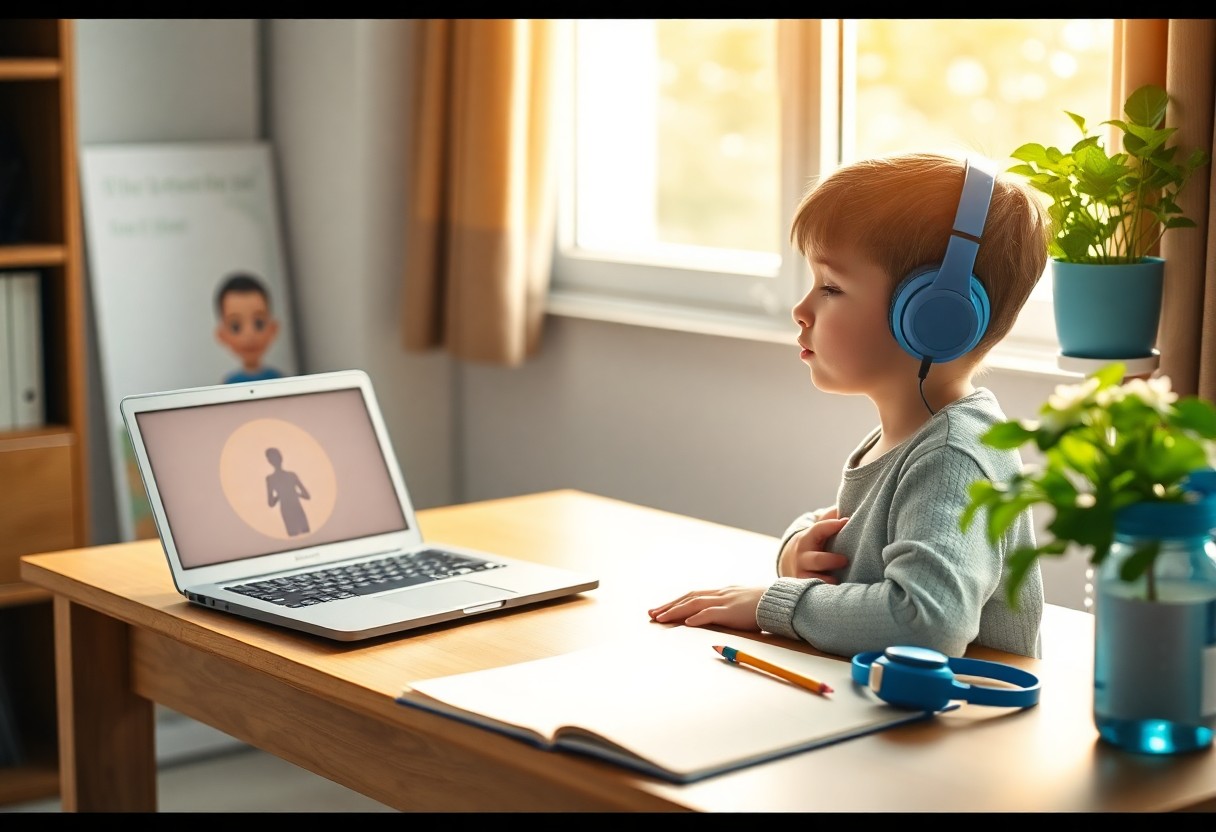
Natural Breathing Techniques
Try short, structured practices you can slip into class breaks: start with 3-5 minutes, 2-3 times daily, and use the Five Deep Breathing Exercises for Kids and Teens as a quick toolkit. Emphasize slow 4-6 second inhales and 6-8 second exhales; this pattern can lower stress and improve focus in minutes. Watch for lightheadedness or tingling and pause if your child hyperventilates; consistent practice builds steady attention.
Breathing Basics
Teach your child diaphragmatic breathing: have them place a hand on their belly, inhale for 4 seconds so the hand rises, then exhale for 6 seconds so it falls-practice 3-5 minutes before class. Sit upright and repeat 5-10 cycles to train breath control. If you notice rapid shallow breaths, slow the counts and include brief rests to avoid dizziness; this foundation supports calmer responses during difficult lessons.
Fun Breathing Exercises for Children
Rotate playful drills like “bubble breaths” (inhale 4, exhale slowly as if blowing bubbles) and “dragon breaths” (big inhale, forceful exhale) for 1-3 minutes to channel energy and cut fidgeting. Offer 3 short reps between activities and give positive feedback so your child sticks with it. Monitor for overexertion during forceful exhales and pause if dizziness appears-these games make practice approachable and effective.
For specifics: bubble breaths = inhale 4s through the nose, exhale 6s through pursed lips, repeat 6-8 times; dragon breaths = inhale 3s, exhale strong 2s, repeat 4 times to release tension; square breathing = 4-4-4-4 for 3 cycles to reset attention. If your child has asthma or other lung issues, consult their provider before starting and stop on any shortness of breath.
Enhancing Focus through Breathing
Simple, timed breathing can sharpen attention within minutes during remote lessons: short sessions of 3-5 minutes, done 2-3 times daily, lower physiological arousal and have shown 10-20% gains in sustained attention in small trials; pairing breaths with visual timers and quick breaks makes practice practical between tasks. Try a visible 4-4-6 or box-breath cue before tricky assignments to see immediate steadiness. Thou can guide your child to adopt one pattern consistently for best results.
- Focused breathing
- 3-5 minutes
- Attention gains
The Connection Between Breathing and Concentration
Physiologically, paced breathing raises heart rate variability and balances autonomic tone, which supports brain networks for attention and working memory; in classrooms, short diaphragmatic practices reduced off-task behavior during 10-20 minute work periods. Classroom pilots report fewer interruptions after 2-3 minute breathing cues and measurable improvements in task completion. Thou can observe steadier posture and quieter screens as early indicators that breathing is improving concentration.
- Heart rate variability
- Vagal tone
- Working memory
Tips for Incorporating Breathing into Learning
Start with micro-practices: a 1-2 minute breath check at lesson start, a 3-minute focus break mid-lesson, and a 30-second reset before quizzes; use timers, chimes, or cards to cue practice, and pair breathing with short stretches or a sensory object to anchor the habit. Simple metrics like on-task minutes or homework completion help you track progress in weeks. Thou should pause if your child experiences dizziness or discomfort and adjust pace accordingly.
- 1-2 minute checks
- 3-minute focus breaks
- Visual timers
Try concrete sequences: cue (3 breaths), focused work chunk (10-15 minutes), reward (1-2 minutes play); alternate a 4-4-6 pattern with a box breath (4-4-4-4) to keep practice engaging, and log simple outcomes like homework completion rate or on-task minutes to refine timing – pilot groups noted around 15% increases in on-task behavior over 2-4 weeks. Watch for hyperventilation risks and stop if the child reports lightheadedness. Thou must suspend practice and consult a professional if intense anxiety appears.
- Cue-work-reward
- 4-4-6 / box breath
- Outcome tracking
Creating a Supportive Learning Environment
Setting Up a Focus-Friendly Space
Designate a dedicated area away from household traffic; place your screen at arm’s length (18-24 inches) with the top at eye level to reduce neck strain. Add a comfortable chair and a small lamp to avoid glare. Use a visual schedule and a timer for 25-45 minute work blocks, and consider noise-reducing headphones (≈20 dB reduction) to block interruptions. Limiting toys and mobile notifications is important to reduce distractions and improve your child’s focus.
Encouraging Mindfulness Practices
Integrate brief, child-friendly practices you can use between lessons: try a 3-5 minute guided breathing or a 60-90 second “5-4-3-2-1” grounding. Use imagery for younger kids-“smell the flower, blow the candle”-and a 4-6 breath cycle for older students. Rely on short apps or videos for consistency, and avoid long sessions that feel forced-pushing too hard can increase resistance; prioritize short, regular practice instead.
Start with a simple script: inhale 4, hold 2, exhale 6, repeat six times; practice before tests or after active breaks. Track progress with a sticker chart or quick notes-many teachers see measurable on-task gains in 2-4 weeks. Let your child lead occasionally so the routine becomes ownership, which makes the practice positively reinforcing rather than a chore.
Resources and Tools
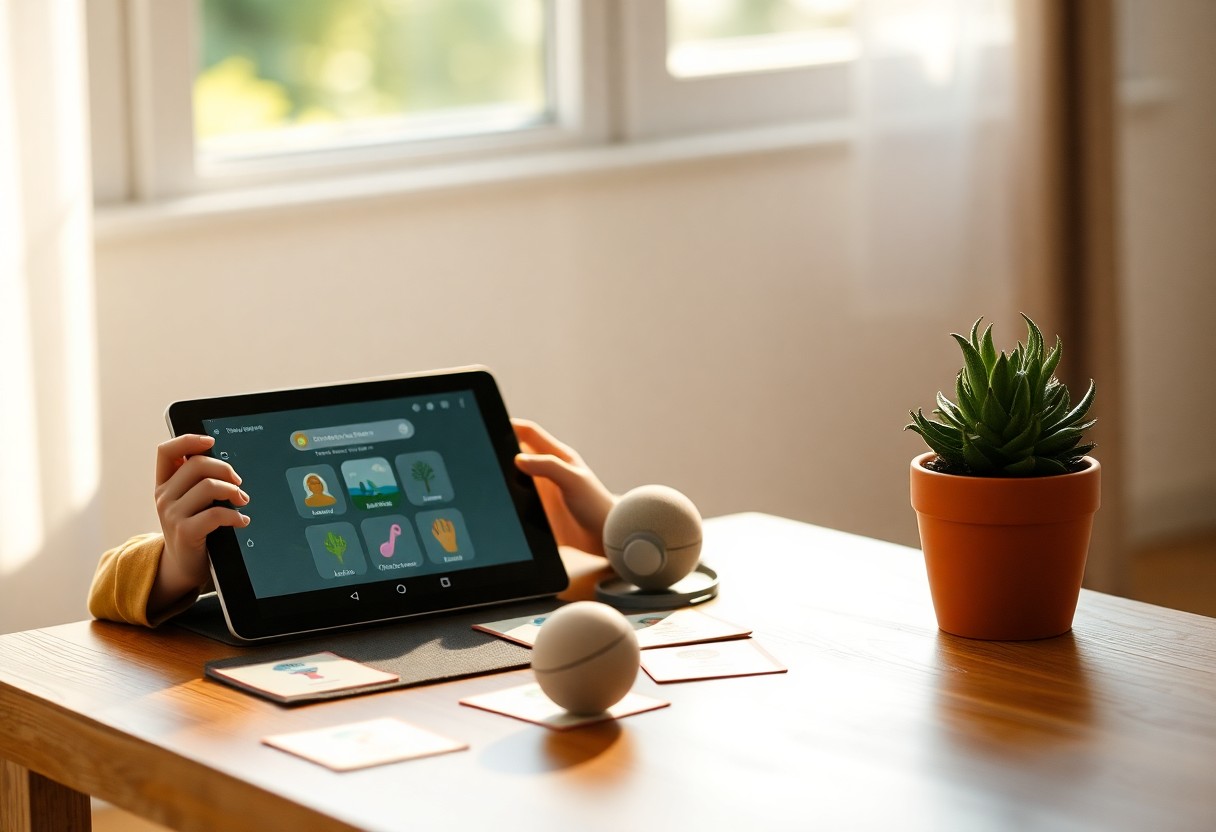
For practical support, assemble a small toolkit you can reach during lessons: a timer, printable cue cards, a tactile breathing prop, and a few reliable apps or short videos. Use 3-5 minute sessions, 2-3 times daily, and place reminders in your child’s learning area. These concrete items make quick respiratory resets easy to deploy between activities and help maintain consistent practice without disrupting class flow.
Apps for Breathing and Focus
Try apps with guided micro-sessions and visual cues-Headspace for Kids, Calm Kids, Smiling Mind, GoNoodle and Breathe2Relax all offer 1-5 minute practices and simple progress tracking. Some provide classroom modes or teacher accounts, while others work offline after download. You can set daily reminders, mute distractions, and pick age-appropriate programs so your child gets brief, repeatable breathing work during transitions.
Books and Videos for Kids
Use short picture books like Breathe Like a Bear (Kira Willey) or activity guides such as Mindful Games to teach techniques with stories and games, then reinforce with videos from Cosmic Kids, GoNoodle, or Sesame Street. Aim for videos under 5 minutes so your child stays engaged, and pair a story-plus-video combo before high-focus tasks to make breathing practice familiar and fun.
Match materials to age and context: for preschoolers pick illustrated stories and 1-3 minute clips; for elementary choose guided prompts and 3-5 minute movement-plus-breathing videos. Download or use YouTube Kids and choose ad-free sources when possible because unvetted online ads or suggested videos can expose your child to inappropriate content. Teachers often integrate a 2-3 minute breathing video right before tests or independent work to help settle the class.
Conclusion
Presently you can support your child’s focus by introducing brief, guided breathing breaks, arranging a calm study spot, and modeling steady breath to ease tension. These natural, easy habits fit into remote learning routines and help your child feel more attentive, confident, and ready to engage with lessons.
FAQ
Q: How does breathing support improve attention and calm during remote learning for children?
A: Targeted breathing techniques activate the parasympathetic nervous system, lowering heart rate and reducing stress hormones so the brain can shift from fight-or-flight to a more focused state. Short, rhythmic breaths increase oxygen flow and stabilize blood sugar and arousal levels, which supports sustained attention and working memory. For children use simple patterns (for example: inhale 3-4 seconds, exhale 4-6 seconds) for 1-3 minutes before a lesson or between tasks to quickly reduce jitteriness and improve listening and task persistence.
Q: What quick, kid-friendly breathing exercises work well in online class settings?
A: Use games and props to keep kids engaged: 1) Belly Buddy: place a stuffed animal on the belly and watch it rise and fall for 6-10 slow breaths; 2) Square Breathing: trace a square while inhaling 3-4 seconds, hold 1-2 seconds, exhale 3-4 seconds, hold 1-2 seconds (repeat 4 times); 3) Balloon Breath: inhale slowly through the nose and imagine inflating a balloon in the belly, then exhale to deflate; 4) Humming Bee (gentle): inhale through the nose, hum softly while exhaling to produce calming vibration (short sets). Each exercise is best kept to 30 seconds-3 minutes and adapted to age and attention span.
Q: Are there precautions or signs to stop breathing activities for children with health concerns?
A: Stop if a child feels lightheaded, dizzy, panicked, or experiences chest pain; these can indicate over-breathing or an underlying issue. Children with asthma, certain cardiac conditions, or seizure disorders should follow medical guidance before starting breathwork. Avoid prolonged breath holds and intense retentions for young children. Keep sessions brief, ensure a calm seated posture, monitor responses, and consult the child’s healthcare provider for tailored adaptations when needed.

Medical Disclaimer
This article is for informational purposes only and is not a substitute for professional medical advice, diagnosis, or treatment. Always consult a qualified healthcare provider before starting, stopping, or changing any treatment, especially if you are pregnant, nursing, have a medical condition, or are taking medications. Never disregard professional medical advice or delay seeking it because of something you have read here. If you experience severe symptoms, allergic reactions, or think you may have a medical emergency, seek immediate care.
