
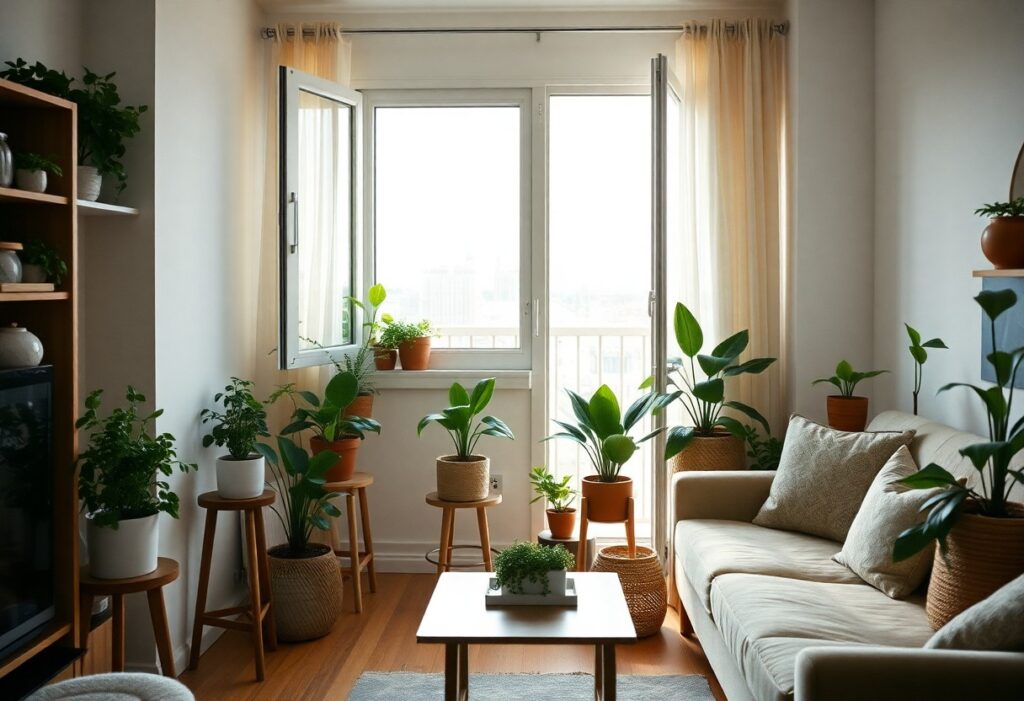
Over time your apartment’s air can trap mold, dust, VOCs and carbon monoxide, triggering allergies and breathing issues, but you can take simple steps to improve it: open windows for fresh airflow, use HEPA filters and activated charcoal, add a few air-purifying houseplants, control humidity, and avoid chemical cleaners. These natural, affordable habits help keep your space fresher and your lungs happier.
Understanding Air Quality in Apartments
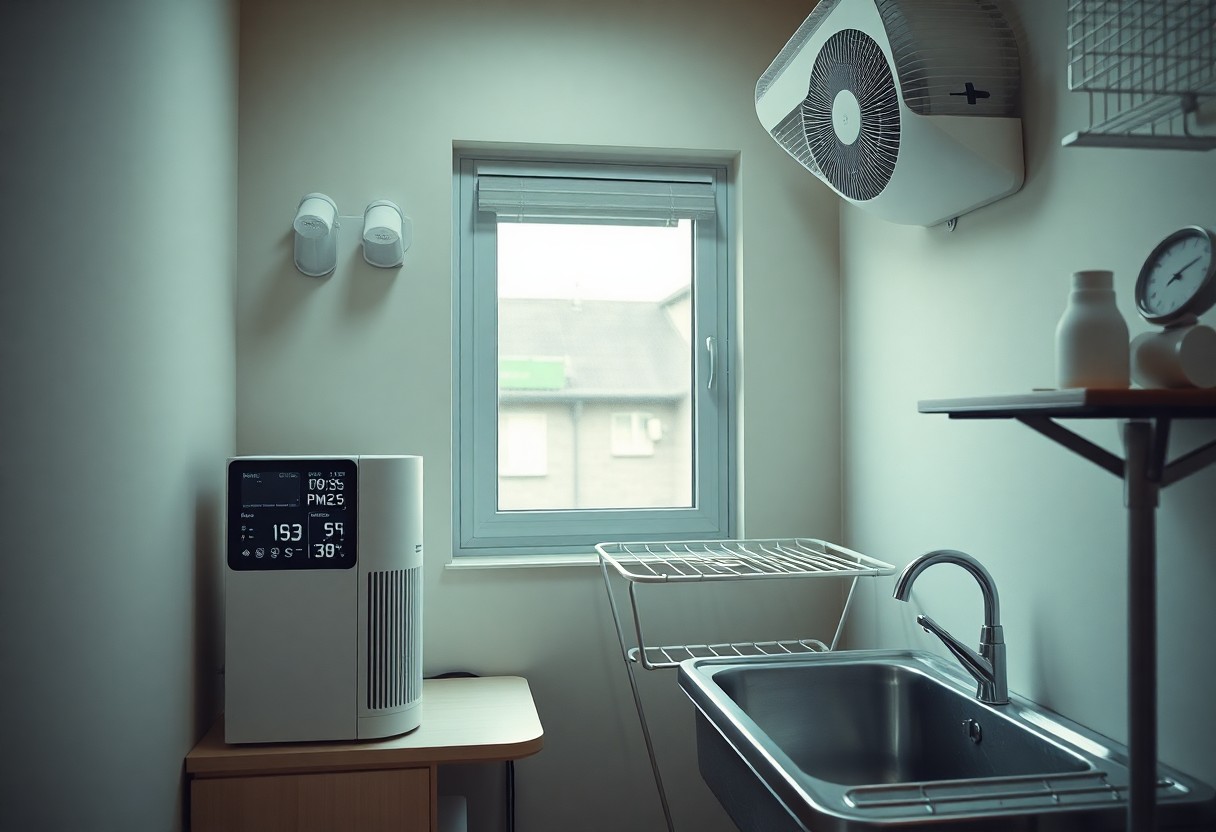
In compact layouts your ventilation often lags behind sources, so pollutant concentrations rise fast; the EPA estimates indoor levels can be 2-5 times higher than outdoors. You face trapped moisture, limited air exchange, and proximity to neighbors’ cooking or smoking. Monitoring with a basic PM2.5 sensor or CO alarm helps you spot problems early and prioritize fixes like increasing ventilation, using exhaust fans, or adding a certified air purifier.
Common Indoor Pollutants
VOCs from fresh paint, new furniture and many cleaning products off-gas for weeks to months, and PM2.5 from cooking, candles and smoking spikes indoor particle levels. You also contend with mold growth after leaks, dust mites in fabrics, pet dander, carbon monoxide from gas appliances and radon that can seep through slabs-each source demands a different fix, from source control to targeted filtration.
Health Effects of Poor Air Quality
Your exposure can trigger immediate symptoms like eye and throat irritation, headaches and fatigue, and worsen asthma or trigger attacks; children, the elderly and people with COPD are especially vulnerable. Long-term exposure to fine particles or radon increases risks of heart disease and lung cancer-radon causes about 21,000 U.S. lung-cancer deaths yearly-so managing air quality affects both day-to-day wellbeing and long-term health.
Specific thresholds help guide action: the WHO recommends an annual PM2.5 target of 5 μg/m³ (2021) and short-term spikes correlate with more ER visits, while OSHA sets an 8‑hour CO limit of 50 ppm. You should test for radon with an inexpensive kit-mitigation can cut levels drastically-and use a HEPA purifier plus exhaust ventilation to lower particles and VOCs for immediate relief.
Natural Solutions for Better Breathing
You can cut indoor pollutant loads by combining simple, low-tech fixes: maintain 40-60% humidity to inhibit dust mites and mold, run a small HEPA filter for 1-2 hours after cooking, and use targeted natural methods to neutralize odors and VOCs. Installing a trickle vent or slightly cracking a window for 10-15 minutes daily also dilutes buildup without losing heating or cooling efficiency.
Houseplants That Purify Air
Choose hardy species proven by the 1989 NASA study-spider plant, snake plant, pothos and peace lily-to help remove VOCs like formaldehyde and benzene; aim for about one plant per 100 sq ft for measurable benefit. Rotate and prune plants for airflow, avoid overwatering to prevent mold growth, and note that peace lilies and pothos are toxic to pets, so place them out of reach if you have cats or dogs.
Natural Air Fresheners
Rely on odor absorbers like activated charcoal and baking soda, use simmering citrus peels with cinnamon or vanilla for short bursts of fragrance, and prefer beeswax or soy candles which burn cleaner than paraffin. Be aware that many scented candles and plug-ins can emit VOCs and particulate matter-so limit their use if you or a household member has asthma.
For practical swaps, keep an open box of baking soda (about 1 cup) in closets, place 50-100 g of activated charcoal in breathable pouches per room, and mix a DIY spray: 1 cup distilled water, 1/4 cup white vinegar, and 8-10 drops of lemon or tea tree oil for odor neutralizing (spritz and air out). If you use imperative oils, diffuse for just 10-15 minutes at low concentration and avoid around infants or sensitive pets; beeswax candles give a subtle scent with less soot than paraffin.
Ventilation Tips for Small Spaces
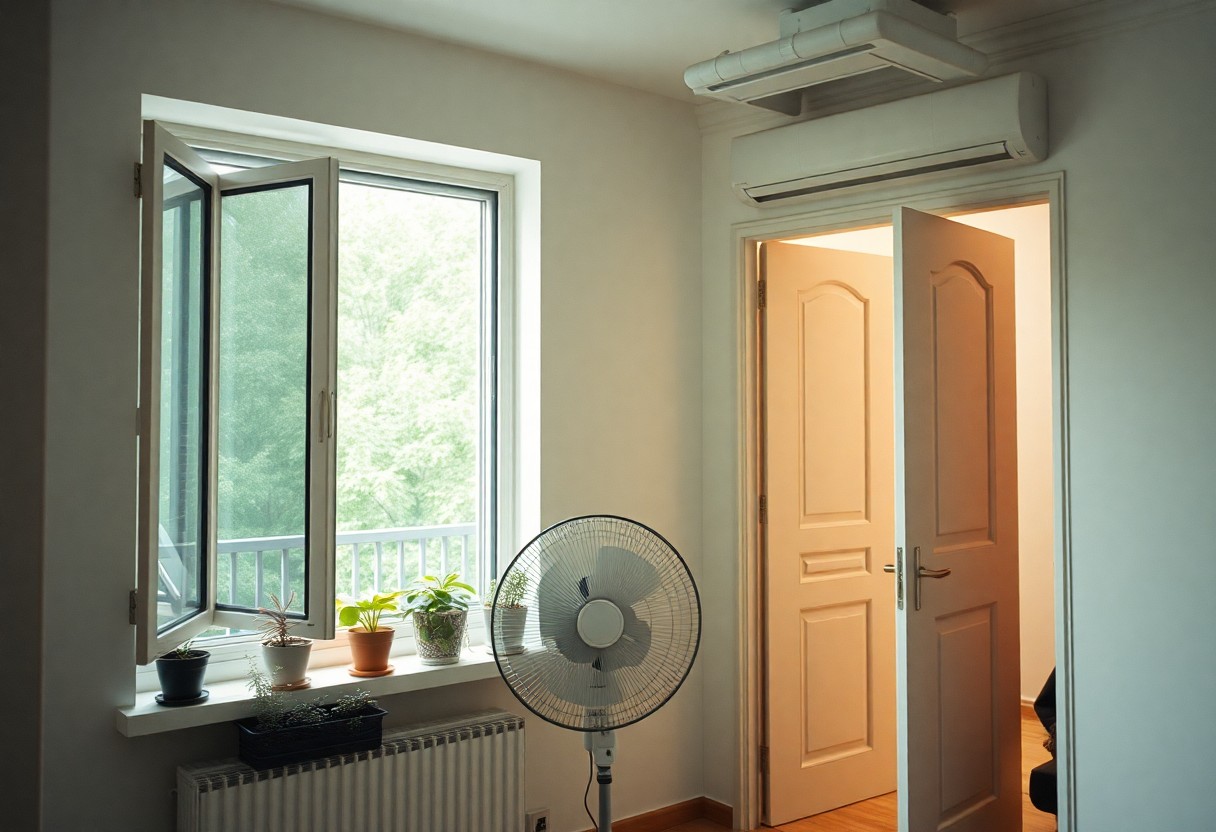
You can cut down pollutant buildup fast by running exhaust fans for 20-30 minutes after cooking or showering, keeping interior doors open to form air paths, and using a window fan to pull stale air out. Cross-ventilation often outperforms single-window airing, lowering CO2 and VOCs more quickly in small spaces. This 10 Best Air Purifiers For Indoors (2025) helps you pick a compact HEPA option to supplement fresh air.
- Run kitchen/bath fans 20-30 minutes post-use to improve ventilation.
- Place a box or window fan in an open window to create a directional flow for stale air.
- Aim for at least ~0.35 air changes per hour (ACH) as a baseline for good air quality.
- Limit indoor VOC sources-paint, aerosols, and scented products-especially when ventilation is low.
Maximizing Fresh Air Flow
Open opposing windows for 5-15 minutes several times daily to create a cross-breeze; adding a 20″ window or box fan (typically ~200-700 CFM depending on model) can ramp exchange rates to roughly 0.5-2 ACH in many apartment rooms. You should also use timed exhaust runs after high-pollution activities to keep air quality stable and reduce peak concentrations.
Creative Window Solutions
When windows are small or fixed, install a reversible window fan or a clipped-in panel fan to exhaust stale air while drawing fresh air through another opening; sealing gaps with weatherstripping directs flow and prevents short-circuiting. Try a slim vent insert for sliding windows to let continuous fresh air in without fully opening the unit.
For DIY installs, cut a piece of rigid foam or plexiglass to fit the sash, mount a reversible fan with vibration pads, and seal edges-this creates a temporary, secure vent that preserves security and reduces drafts. You can also adapt a dryer vent kit or use a magnetic window fan for metal frames; in all cases, prioritize a unit with a washable prefilter and a HEPA or high-MERV secondary filter when possible to remove fine particulates.
Maintaining Indoor Humidity
Aim to keep indoor humidity between 30-50% to limit allergens and avoid dry air; when levels rise above 60% you increase risk of mold and dust-mite growth. You can track RH with an inexpensive hygrometer ($10-$25) and adjust tactics quickly to keep air comfortable and lungs safe.
Importance of Humidity Control
High humidity worsens allergy and asthma symptoms because dust mites and mold reproduce faster when relative humidity stays above 50%. Low humidity below 30% dries mucous membranes, increasing respiratory irritation and viral survival. You should set numeric targets so roommates and visitors understand why adjustments matter.
Natural Ways to Regulate Humidity
To lower humidity, run exhaust fans during showers and cooking, open windows when outdoor RH is lower, and place desiccant packets or calcium chloride tubs in closets and bathrooms. To raise humidity, group 3-5 houseplants, set shallow water trays near heat sources, or briefly simmer water while you’re home. Choose methods that fit your layout and safety needs.
For a small bathroom try one 500-1000 g calcium chloride absorber, replacing it every 2-4 weeks. In a 30 m² apartment grouping 4-6 medium houseplants can raise humidity a few percentage points; ventilate for 10-15 minutes after showering if outside RH is lower. Log hygrometer readings over two weeks to measure what actually works in your space.
Eco-Friendly Cleaning Practices
Prioritize habits that cut airborne chemicals and dust: choose fragrance-free, low‑VOC cleaners, use microfiber cloths that can remove up to 99% of surface bacteria without chemicals, and always ventilate for at least 10-15 minutes after cleaning to dilute residues. Swap aerosols for pump sprays, minimize single‑use wipes, and target source control-clean high-touch zones (doorknobs, switches) twice weekly to keep particle loads down.
Choosing Non-Toxic Cleaners
Scan labels for certifications like EPA Safer Choice, Green Seal or Ecologo and avoid vague “fragrance” listings; that often hides phthalates or VOC blends. Skip products with triclosan, quaternary ammonium compounds (“quats”) or long ingredient lists. Prefer plant‑based surfactants and pH‑neutral formulas, and aim for cleaners with VOCs under 50 g/L when possible to reduce indoor chemical load.
DIY Cleaning Recipes
Make simple, effective mixes: all‑purpose spray – 1 cup distilled white vinegar + 1 cup water + 1 tsp liquid castile soap; glass – 1 part vinegar to 4 parts water; grout – paste of baking soda + water (3:1). Use baking soda for abrasive cleaning and vinegar for mineral buildup, but never mix vinegar with bleach (creates toxic chloramine/chlorine gases).
Use 3% hydrogen peroxide undiluted as a mild disinfectant-spray until wet and let sit ~60 seconds before wiping; it’s a safer alternative to harsh disinfectants on many surfaces. Store DIY solutions in labeled, dark containers, make small batches and replace within 7 days. Avoid combining agents (for example, do not mix hydrogen peroxide and vinegar in one bottle) and test porous or colored materials first to prevent damage.
Conclusion
Presently you can improve your apartment’s air by adding houseplants that help filter pollutants, opening windows for cross-ventilation when weather permits, using activated charcoal to reduce odors, controlling moisture to prevent mold, choosing low-VOC cleaners and furnishings, and keeping surfaces dust-free; these simple, natural steps help you breathe easier and enjoy fresher indoor air in compact spaces.
FAQ
Q: What natural steps can I take to improve air quality in a small apartment?
A: Improve air exchange by creating cross-ventilation (open opposing windows or use a window fan to pull air through) for 5-15 minutes 1-3 times daily when outdoor air is clean. Reduce pollutant sources: avoid indoor smoking, choose low-VOC paints and furnishings, air out new furniture or let it off-gas in a ventilated space. Use natural odor and moisture absorbers-activated charcoal bags for VOCs/odors and baking soda for localized smells. Control humidity to about 30-50% by running exhaust fans during showers, drying laundry near a window or outdoors, and using moisture-absorbing packs if needed. Clean regularly (dust, vacuum with good filters, launder textiles) to cut dust and allergens. Avoid heavy use of scented sprays, incense, and frequent candle burning, as they produce particulates.
Q: Which houseplants help in small spaces and how should I place and care for them?
A: Helpful, low-maintenance options include spider plant (pet-safe), Boston fern (pet-safe, likes humidity), pothos (effective but toxic to pets), snake plant (tolerates low light, toxic to pets), and peace lily (prefers humidity, toxic to pets). Plants contribute modestly to VOC reduction, increase perceived air quality, and help regulate humidity. Use a mix of 3-5 medium plants or several small ones distributed across living areas and the bedroom; place one near common pollutant sources like the kitchen. Prevent mold by avoiding overwatering, ensuring good drainage, and wiping leaves to remove dust. If you have pets, choose non-toxic varieties or keep toxic species out of reach.
Q: How can I monitor and maintain healthy indoor air naturally over time?
A: Use an indoor air monitor that measures CO2 and PM2.5 to track ventilation and particulate levels; aim for CO2 under ~1000 ppm and low PM2.5 (closer to outdoor background). If PM2.5 spikes from outdoor pollution, keep windows closed and use natural absorbers inside. Keep humidity steady (30-50%) to limit mold and dust-mite growth; ventilate bathrooms and kitchens promptly after use. Replace or recharge activated charcoal bags per product guidelines and refresh baking soda monthly. Reduce ongoing emissions by storing household chemicals in sealed containers and ventilating after painting or furnishing changes. Schedule regular cleaning and plant maintenance, and adjust ventilation routines seasonally based on outdoor air quality data.

Medical Disclaimer
This article is for informational purposes only and is not a substitute for professional medical advice, diagnosis, or treatment. Always consult a qualified healthcare provider before starting, stopping, or changing any treatment, especially if you are pregnant, nursing, have a medical condition, or are taking medications. Never disregard professional medical advice or delay seeking it because of something you have read here. If you experience severe symptoms, allergic reactions, or think you may have a medical emergency, seek immediate care.
