
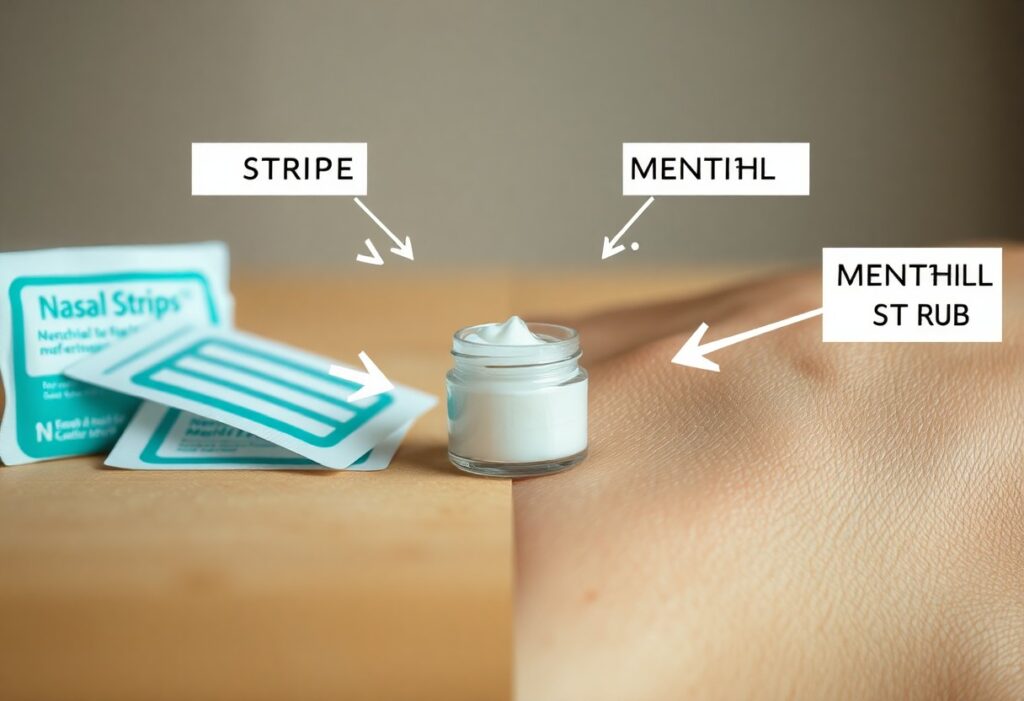
Relief comes in various forms when you’re dealing with nasal congestion. You may find yourself deciding between nasal strips for easy external application, Menthol rubs that provide a soothing sensation, or internal methods like nasal sprays for more direct relief. Each option has its benefits and drawbacks, and understanding these can help you choose the best method for your needs. This post will guide you through these three approaches, ensuring you make an informed decision to breathe easier.
Understanding Nasal Strips
What are Nasal Strips?
Nasal strips are adhesive strips that you place on the outside of your nose to help improve airflow through your nasal passages. Typically made from flexible materials, these strips use a combination of support and tension to open up your nostrils, making them a popular choice for people seeking relief from nasal congestion, especially during sleep or exercise.
How They Work for Nasal Relief
When you apply nasal strips, they physically pull open your nostrils, which can help reduce resistance in your airways. This action creates a larger passage for air to flow, allowing you to breathe more freely. As a result, many users report enhanced comfort during sleep and improved athletic performance.
This method is particularly effective when congestion is due to common colds or allergies, where inflamed nasal passages can limit airflow. Nasal strips can improve your breathing by boosting airflow by up to 31%, allowing for a more restful night or better exercise performance. Some users also find that nasal strips diminish the need for internal drugs or sprays, marking a non-invasive option that can provide immediate relief without medication-related side effects.
Exploring Menthol Rubs
Menthol rubs are topical products that leverage the cooling properties of menthol to provide temporary relief from nasal congestion and discomfort. Popularly found in ointments and balms, these products are typically applied to the chest, throat, or nostrils, delivering a soothing sensation that can ease symptoms associated with colds or allergies, enhancing your breathing experience.
The Basics of Menthol Rubs
Menthol rubs contain menthol, a compound derived from peppermint oil, which works by activating cold-sensitive receptors in your skin. This action creates a sensation of coolness, often overpowering the feeling of discomfort, while also providing a gentle aroma that can be soothing. The ease of application makes them a convenient option for quick relief.
Benefits of Using Menthol for Relief
Using menthol rubs can provide significant relief by opening airways, helping you breathe more easily. In addition to the immediate cooling effects, studies suggest that menthol can reduce the perception of pain and discomfort, offering an alternative solution to oral medications. Many users find that applying menthol rubs before bedtime can lead to a more restful night’s sleep.
The benefits of using menthol for relief extend beyond mere symptom management. Clinical observations have shown that menthol can stimulate airflow and enhance your sensory experience, allowing clearer breathing. In a notable study, participants reported a decrease in nasal congestion when using menthol rubs, highlighting their effectiveness. Furthermore, the soothing scent of menthol can also improve mood and promote relaxation, making it a multitasking remedy in your wellness toolkit.
External vs Internal Relief Methods
When considering relief methods for nasal congestion, you have two main categories: external and internal options. External methods include nasal strips and menthol rubs, offering immediate access to symptom alleviation without the need for ingestion. In contrast, internal relief methods involve oral medications, which act on the body systemically. Choosing the right method largely depends on the severity of your symptoms and personal preference.
Pros and Cons of External Options
Pros and Cons of External Options
| Pros | Cons |
|---|---|
| Immediate relief | Temporary effects |
| Easy to use | May irritate skin |
| No side effects | Limited effectiveness for severe congestion |
| Non-invasive | Dependent on proper application |
| Wide availability | May not provide long-term relief |
| Good for exercise or sleep | Some users may find them uncomfortable |
| Helps with snoring | Not suitable for young children |
| Can be used alongside other methods | Limited cooling effect after a while |
When to Consider Internal Relief
If you are experiencing persistent or severe symptoms, internal relief methods such as decongestants or antihistamines might be more effective. These options not only target nasal congestion but also address underlying causes like allergies or sinus infections. It’s advisable to consider these treatments when over-the-counter external options aren’t providing enough relief or when you encounter prolonged issues, ensuring you consult with a healthcare professional to determine the best course of action.
Moreover, if your congestion is accompanied by other symptoms like fever, facial pain, or thick nasal discharge, internal treatments become even more relevant. For instance, systems like oral decongestants can reduce inflammation and promote drainage, addressing the source of discomfort. Always be aware of how different medications may interact with one another and consult a pharmacist or physician to optimize your relief strategy effectively.
Comparing Effectiveness
| Method | Effectiveness |
|---|---|
| Nasal Strips | Open nasal passages, usually providing immediate relief. |
| Menthol Rubs | Soothing sensation, may take longer for relief, varies by individual. |
Nasal Strips vs Menthol Rubs
Nasal strips are designed for quick and effective relief by mechanically opening nasal passages, making them ideal for immediate nasal congestion alleviation. In contrast, menthol rubs provide a soothing sensation and may help you breathe easier over time, but can take longer to feel the effects. Your choice may depend on how urgently you need relief and personal comfort.
Personal Preferences and Experiences
Your experience with nasal relief methods often reflects personal preferences and individual responses to each option. Some may find nasal strips effective and convenient, particularly during sleep, while others may prefer the calming aroma of menthol rubs. Individual preferences can lead to unique combinations of these methods for optimal results, as some users find alternating between the two enhances their overall comfort.
It’s important to note that personal experiences with nasal relief methods can vary significantly. For instance, while some people swear by nasal strips during allergy season, finding them indispensable for better sleep, others may prefer the aromatic relief of menthol rubs for their soothing qualities. This variation highlights the importance of experimenting with both options to determine which best suits your needs. Feedback from friends or online communities can also provide insight into what has worked for others, helping you make an informed choice tailored to your personal experiences.

Tips for Choosing the Right Method
- Consider your symptoms and their severity.
- Evaluate your preferred lifestyle and convenience.
- Look for allergens that may exacerbate your condition.
- Research both the internal Max-Air Nose Cones versus external Breathe Right strips.
- Consult your healthcare provider for personalized advice.
This will help ensure you select the most effective relief method for your needs.
Assessing Your Symptoms
Start by identifying the specific symptoms you experience, such as congestion, sinus pressure, or difficulty breathing. It’s important to evaluate whether your issues arise from allergies, colds, or other medical conditions, as this will influence your choice of treatment. For instance, if you have persistent nasal congestion from allergies, you might benefit more from nasal strips, while internal methods could be beneficial for more severe blockages.
Recommendations for Use
When using nasal strips, apply them on clean, dry skin just before bedtime or whenever congestion strikes. For menthol rubs, ensure you follow the package instructions for application, typically avoiding sensitive areas like the eyes. If you choose internal relief methods, ensure that you have no respiratory conditions that contraindicate their use. Adjust your choice based on your comfort level and effectiveness.
For optimal results, consider using nasal strips at night to enhance breathing, while keeping menthol rubs for daytime use. Test each method in different situations—travel, exercise, or at home—to identify your personal preference. Consult with a healthcare provider if symptoms persist, and be wary of over-relying on a single method, as your body may adapt and lessen effectiveness over time.
Safety and Side Effects
When considering nasal strips, menthol rubs, or internal relief methods, understanding safety and side effects is vital. Nasal strips are generally safe, but they may cause skin irritation. Menthol rubs can lead to allergic reactions or respiratory discomfort in sensitive individuals. Internal methods, like decongestants, may cause dizziness or increased heart rate, particularly if overused. Always weigh benefits against potential risks and monitor your body’s response closely.
Possible Reactions to Methods
Your choice of relief method can lead to varied reactions. Some may experience skin irritation from nasal strips or a burning sensation from menthol rubs. Internal medications might cause side effects like insomnia or palpitations. Be vigilant about any unusual symptoms, as they can help you identify intolerances or allergies early.
When to Seek Medical Advice
If you experience severe side effects like difficulty breathing, persistent rash, or signs of an allergic reaction after using these methods, it’s important to seek medical advice promptly. Persistent symptoms such as congestion that doesn’t improve with treatment or worsens over time can also indicate a more serious condition that requires professional evaluation.
Consult your healthcare provider if you have chronic nasal issues or if over-the-counter remedies are failing to provide relief. They can help discern whether your symptoms are part of an underlying condition. Additionally, if you feel unusually fatigued, dizzy, or if your heart rate is elevated significantly after using a specific method, getting a professional opinion is crucial to ensure your safety.
Summing up
As a reminder, when choosing between nasal strips, menthol rubs, or other relief methods, consider what works best for your comfort. Nasal strips can help open up your airways externally, while menthol rubs provide soothing relief through aroma. Internal relief options, like saline sprays, offer a different approach by moisturizing your passages. Each method has its benefits, so explore them to find which one best suits your needs for a clearer, more comfortable breathing experience.
FAQ
Q: What are the differences between nasal strips and menthol rubs for nasal relief?
A: Nasal strips physically open the nasal passages by adhering to the outside of the nose, providing immediate relief from congestion. Menthol rubs, on the other hand, are applied externally and contain menthol which creates a cooling sensation that can help ease the feeling of congestion but doesn’t actually open the nasal passages.
Q: Are internal relief methods more effective than external methods like nasal strips and menthol rubs?
A: Internal relief methods, such as nasal sprays or decongestants, typically address the cause of congestion at its source and can provide more effective and prolonged relief compared to external methods like nasal strips and menthol rubs. However, they may come with side effects that external methods generally avoid.
Q: Can nasal strips and menthol rubs be used together for enhanced relief?
A: Yes, nasal strips and menthol rubs can be used together to enhance relief. Nasal strips can open the nasal passages while menthol rubs provide a soothing effect on irritated airways, making them a complementary approach for managing congestion.

Medical Disclaimer
This article is for informational purposes only and is not a substitute for professional medical advice, diagnosis, or treatment. Always consult a qualified healthcare provider before starting, stopping, or changing any treatment, especially if you are pregnant, nursing, have a medical condition, or are taking medications. Never disregard professional medical advice or delay seeking it because of something you have read here. If you experience severe symptoms, allergic reactions, or think you may have a medical emergency, seek immediate care.
