

With your Chest rub that suddenly stops working, you may be dealing with expired or contaminated product, improper application, or congestion from another cause; check the label and storage, reapply to clean skin or try a fresher formulation for effective relief, and seek medical attention if you notice worsening breathing or severe symptoms.
Common Reasons Your Chest Rub Isn’t Working
Many things can blunt your rub’s effect: expired active ingredients, heat-damaged oils, altered skin absorption, or sensory tolerance. For example, olfactory adaptation can begin in as little as 10-15 minutes of continuous exposure, and repeated daily menthol use often feels weaker after several days to weeks. Check expiry dates, storage, recent medication changes, and whether you’ve been applying it the same way for too long to identify the culprit.
Expiration Dates and Storage Conditions
Most menthol-based balms list a shelf life of about 2-3 years; after that the volatile oils lose potency and can separate or smell rancid. Store jars sealed at room temperature (ideally 20-25°C / 68-77°F), away from sunlight and heat sources-exposure to >30°C speeds degradation. If the texture, color, or smell changes or the product separates, discard it to avoid reduced effect or skin irritation.
Changes in Your Body Chemistry
Your body’s response can shift with hormones, medications, or skin condition. Pregnancy often heightens smell sensitivity, while antihistamines, SSRIs, or nasal steroids can blunt perception; skin thinning from topical steroids or eczema alters absorption. Repeated menthol exposure also causes sensory receptor adaptation, so what worked for you last week may register as weaker now.
To counteract these changes, try rotating actives (switch between menthol, camphor, and eucalyptus) or give your nose and receptors a 48-72 hour break; steam inhalation or brief nasal saline use can improve delivery. If you develop rash, worsening breathing, or systemic symptoms after application, stop use and consult a clinician, especially if you’re pregnant or on interacting medications.
How to Rejuvenate Your Chest Rub Experience
If your rub loses punch after 20-30 minutes, try reactivating it: warm a pea-sized amount between your palms for 10-15 seconds, apply a thin layer, then seal with a warm cloth for 3-5 minutes to boost vapor release. You should avoid applying to broken skin or near eyes, and for technique tips consult Sternum rub technique: Best practices and FAQs.
Choosing the Right Products
Compare labels for menthol, camphor, and eucalyptus-formulas vary widely; pick lower-odor or reduced-strength options if you have sensitive skin or asthma. You should never use chest rubs on children under 2; for older kids, use pediatric formulas and test a small patch on your forearm for 24 hours to check tolerance. Pay attention to fragrance and preservative lists to avoid irritation.
Application Techniques That Maximize Effectiveness
Use a gentle, circular massage over the upper chest and along the sternum for 30-60 seconds to help vapors rise; then cover with a breathable layer to trap heat for 3-5 minutes. You should avoid vigorous pressure on the ribs and keep product away from the face. For best results reapply every 4-6 hours as labeled.
For more control, divide application: apply a thin strip down the center of the chest and two light lines on each side, each about 3-4 cm wide, massaging toward the center. Adults generally need a fingertip amount (≈0.5-1 g); elderly skin may need less. If you feel burning or increased wheeze, wash off immediately and consult a clinician.
Alternative Remedies to Consider
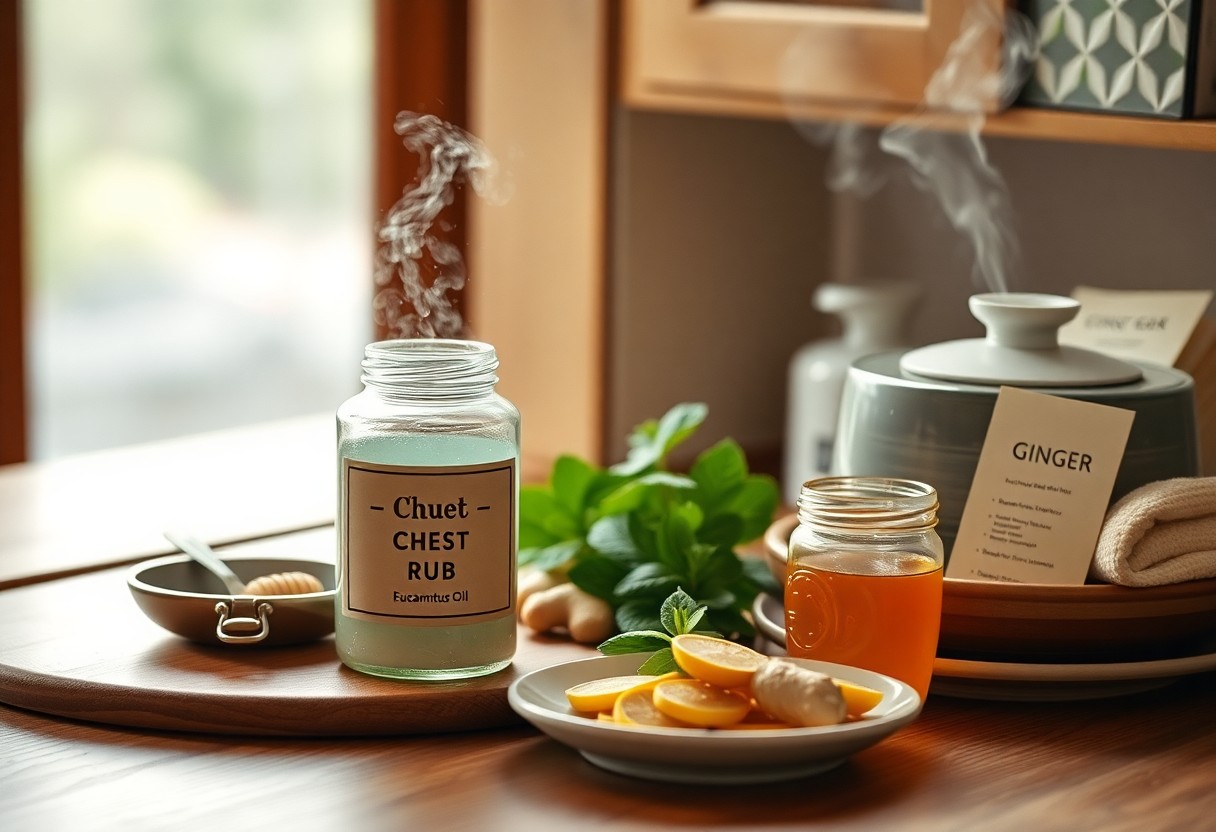
You can layer simple interventions: use a humidifier at 40-50% humidity, inhale steam for 5-10 minutes with 1-2 drops eucalyptus in hot water, try saline nasal spray or a neti pot with isotonic saline, and use honey (1 tsp) for cough in anyone over 1 year. Small trials show steam gives short-term relief and honey reduces nighttime cough; do not give honey to infants under 1 year.
Natural Remedies
Try peppermint or eucalyptus via diffuser (1-2 drops) or steam rather than applying undiluted oil to skin, and irrigate with isotonic saline (neti pot or spray) to clear mucus-240 mL rinses work for many people. You’ll often feel relief within minutes; a 2010 RCT showed shorter nasal obstruction after steam. Avoid undiluted necessary oils on skin and near infants, and keep humidity at 40-50% to prevent mold.
Over-the-Counter Alternatives
For targeted relief, oxymetazoline 0.05% nasal spray (e.g., Afrin) works fast but do not use it for more than 3 days or you risk rebound congestion; oral pseudoephedrine 60 mg every 4-6 hours (max 240 mg/day) helps congestion but avoid it if you have high blood pressure. Guaifenesin 200-400 mg every 4 hours thins mucus; topical camphor/menthol vapors can soothe but aren’t safe for children under 2.
Check labels for combination products and interactions-pseudoephedrine can interact with MAOIs and often requires ID at the pharmacy, while phenylephrine has limited efficacy in many trials. Use saline or a humidifier first to improve drug effect, stick to the lowest effective dose, and see your clinician if symptoms persist past 10 days. Always read warnings and contraindications.
Tips for Maintaining a Healthy Chest Area
Keep your chest skin and underlying tissue functional by combining gentle daily care with targeted habits: moisturize twice a day, exfoliate no more than once weekly, and avoid applying strong mentholated products to irritated or broken skin. Rotate product textures (cream one day, gel the next) to reduce sensory desensitization and use a humidifier at 40-50% when indoor air is dry. Knowing that skin turnover takes about 28 days helps you time treatments and patch tests.
- Chest rub – patch test, apply sparingly
- Hydration – moisture within 3 minutes post-shower
- Skincare – fragrance-free, non-comedogenic options
- Breathing exercises – 5-10 minutes, twice daily
- Humidity – maintain 40-50% indoors
Hydration and Skincare
You should lock in moisture by applying a fragrance-free moisturizer within three minutes of bathing and again at night, using humectants like hyaluronic acid and occlusives such as petrolatum for flaky patches; aim for light exfoliation once weekly to prevent buildup. If you have eczema or broken skin, avoid applying mentholated or camphorated rubs and consult a clinician before steroid use to prevent irritation or systemic absorption.
Importance of Breathing Exercises
Incorporate short, paced breathing sessions-5-10 minutes twice daily-to improve airway clearance and relaxation; techniques like diaphragmatic breathing or paced breathing at ~6 breaths/min often reduce perceived breathlessness and improve heart-rate variability. Start seated, progress to standing or during light movement, and stop if you feel lightheaded.
For practical routines, try the 4-7-8 method: inhale 4 seconds, hold 7, exhale 8, repeat 4 cycles, or box breathing: inhale 4, hold 4, exhale 4, hold 4 for 5-10 cycles; these give concrete results-many people report calmer breathing and less chest tightness after 1-2 weeks of daily practice. If dizziness occurs, pause and resume normal breathing.
When to Seek Medical Advice
If self-care fails, seek medical advice when you have shortness of breath, chest pain, high fever (>38°C/100.4°F), confusion, or rapidly worsening symptoms. For example, persistent fever of 39°C, coughing up blood, or oxygen saturation under 92% warrant immediate evaluation. Schedule care within 24-48 hours for progressive symptoms, and go to the ER for severe respiratory distress or sudden-onset chest pressure.
Understanding Your Symptoms
Pay attention to pattern, duration, and severity: viral bronchitis often improves in 7-10 days, while bacterial pneumonia typically causes persistent fever, pleuritic chest pain, and focal crackles on exam. Use a home pulse oximeter-SpO2 <92% is concerning. Note sputum color, wheeze, or night sweats; these data points help your clinician choose imaging, antibiotics, or inhaled bronchodilators.
Finding a Healthcare Professional
Choose the right venue based on urgency: call 911 or go to the ER for severe dyspnea, cyanosis, or altered mental status; visit urgent care for moderate fever, significant cough, or inability to reach your PCP; use telemedicine for mild symptoms or follow-up. Expect chest X-ray, pulse oximetry, and possibly rapid flu/COVID tests. Act within 24-48 hours if symptoms progress.
Bring a photo of the chest rub and its ingredients, a medication list, symptom timeline, and recent temperature and SpO2 readings to your appointment. Ask about specific tests (chest X‑ray, CBC, CRP, sputum culture) and treatment options like inhalers, antibiotics, or oral steroids. If symptoms persist beyond 4 weeks, request referral to a pulmonologist or ENT for chest CT or pulmonary function testing.
Final Words
With these considerations, you can troubleshoot why your chest rub stopped working and restore relief: check expiration and ingredients, ensure clean skin and correct application, avoid overuse that dulls scent, try alternating formulas or combining with steam or inhalation, and consult your clinician if symptoms persist or don’t match a simple cold. Small changes to dosage, method, or product usually make a big difference.
FAQ
Q: Why did my chest rub stop working even though I apply it the same way?
A: Over time you can become desensitized to the scent and cooling sensation, so it feels less effective even if the product still provides the same physiological effect. Other causes include an expired or oxidized product, changes in your skin (dryness or thickening) that reduce absorption, applying it over clothing instead of bare skin, or progression of the underlying illness (worse congestion or a secondary infection). Environmental factors such as very dry air or heavy nasal blockage can also blunt the perceived benefit.
Q: How can I restore or improve the effectiveness of my chest rub?
A: Start by checking the expiration date and replacing any old or rancid-smelling product. Clean and dry the skin before applying a thin layer directly to the chest or back as directed, and avoid applying to broken or irritated skin. Rotate between products with different active ingredients (menthol, eucalyptus, camphor) to reduce olfactory habituation. Use adjunct measures like a warm shower or steam inhalation, a humidifier, saline nasal spray, and gentle chest massage to help loosen mucus and improve airflow. If you have persistent blockage, a short course of an appropriate oral or nasal decongestant (per label or pharmacist advice) can increase effectiveness. If symptoms persist despite these steps, consult a healthcare provider.
Q: Are there safety concerns or better options if a chest rub isn’t working for me?
A: Yes. Some chest rub ingredients can irritate sensitive skin or airways, and camphor-containing products can be toxic if ingested or used on young children-many are not recommended for infants and toddlers. Overuse may worsen irritation or cause paradoxical discomfort. Safer or more effective alternatives include using a cool-mist humidifier, saline nasal rinses, steam inhalation, oral expectorants or decongestants when appropriate, and seeking medical evaluation for bacterial infection, asthma, or other respiratory conditions. Stop use and seek medical attention for severe shortness of breath, high fever, persistent symptoms, or signs of an allergic reaction.

Medical Disclaimer
This article is for informational purposes only and is not a substitute for professional medical advice, diagnosis, or treatment. Always consult a qualified healthcare provider before starting, stopping, or changing any treatment, especially if you are pregnant, nursing, have a medical condition, or are taking medications. Never disregard professional medical advice or delay seeking it because of something you have read here. If you experience severe symptoms, allergic reactions, or think you may have a medical emergency, seek immediate care.
