
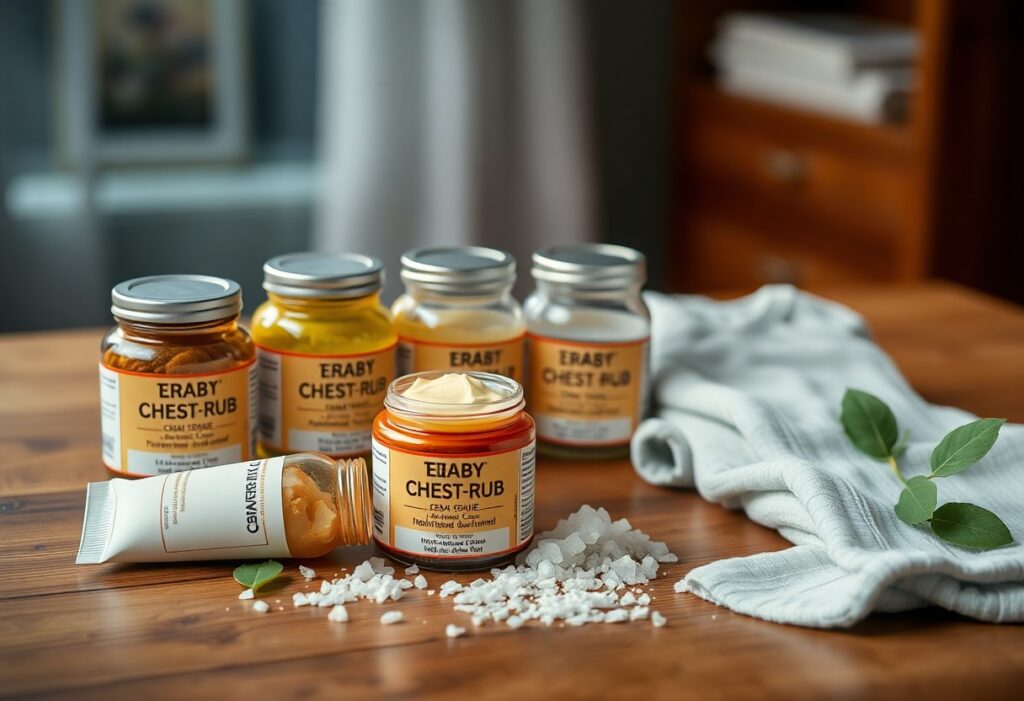
Safety matters: you should know that popular Chest rub myths – like using them on infants or in large amounts – can cause burns, allergic reactions, or breathing problems, putting your family at risk. This friendly guide helps you spot the 6 dangerous myths and offers simple, safer alternatives and correct usage so you can protect your loved ones and treat symptoms more safely.

Myth 1: Chest Rubs Cure Coughs
Understanding the Truth
Many chest rubs work by creating a cooling sensation from menthol or eucalyptus that reduces the perception of congestion, but they do not shorten the course of viral coughs. A randomized trial published in Pediatrics (2010) in children ages 2-11 showed improved cough severity and sleep with vapor rub versus petrolatum or no treatment, yet illness duration stayed the same. You should view these products as symptom relievers, not cures, and follow age recommendations closely.
Risks of Overuse
Applying too much product, using multiple mentholated items, or putting rubs on infants can cause problems: skin irritation, increased inhalation of menthol/camphor, breathing difficulties, and-rarely-seizures with camphor exposure. The American Academy of Pediatrics advises against mentholated chest rubs for children under 2. You must stick to labeled amounts and avoid application under the nose or on broken skin.
More specifically, occluding a heavily coated chest with tight clothing or multiple layers can increase percutaneous absorption and inhalation, amplifying risks. Case reports link topical camphor exposure and ingestion to seizures and respiratory depression in young children. If you combine a rub with oral cough medicines or apply it repeatedly within hours, you raise the chance of adverse effects. Safer measures for infants and young children include saline nasal drops, humidified air, and (for children over 1 year) a teaspoon of honey at bedtime, while you reserve mentholated products for older children and adults used exactly as directed.
Myth 2: Chest Rubs Are Safe for All Ages
Even common over-the-counter chest rubs contain ingredients like menthol, eucalyptus, and camphor that pose real risks to young children; most labels advise against use on kids under 2. Studies and poison-control reports show topical exposures can cause skin irritation, respiratory distress, or seizures in infants, and one helpful primer is Six lung cancer myths debunked | McLaren Oakland Blog which outlines risks of inhaled irritants.
Baby Risks
For babies under 2, your skin and airway are more permeable, so a pea-sized dab on the chest can become an acute hazard; inhalation may trigger coughing, wheeze, or central nervous system symptoms, and ingestion-even a small amount-has caused seizures in infants in reported poison-center cases, so you should avoid topical camphor-containing products entirely for that age group.
Guidelines for Use
When you use chest rubs for older children, follow the label exactly: apply only to the chest or back (never under the nose), use a small amount, avoid broken skin, and don’t add heat or cover the area, since heat increases absorption; check with your child’s doctor before using on kids with asthma or reactive airways.
For safer alternatives and actions, you can use saline nasal drops, a cool-mist humidifier, and gentle suctioning for infants; if a child shows worsening breathing, persistent vomiting, or seizures after exposure, stop exposure and call Poison Control at 1-800-222-1222 (US) or seek emergency care immediately.
Myth 3: Chest Rubs Work Instantly
You might notice a cooling sensation within minutes, but perceived relief is not the same as instant medical improvement. Sensation from menthol or eucalyptus often appears in 5-15 minutes, may peak around 30-60 minutes, and typically fades within 2-4 hours. If symptoms like noisy breathing or poor feeding persist, don’t rely on a rub to fix an urgent problem.
The Science Behind Relief
Menthol and similar agents activate TRPM8 receptors, producing a cooling feeling without reliably opening airways; studies show patients report subjective ease while objective measures such as peak expiratory flow or spirometry usually remain unchanged. For example, trials comparing vapor rubs to placebo found improved sleep scores but no consistent change in measured airflow.
Patience is Key
Wait about 30-60 minutes after application to judge effect; if there’s no improvement or any worsening, act. For infants and young children, watch for increased work of breathing, stridor, poor feeding, or cyanosis-these signs require immediate medical evaluation rather than more waiting.
Practical steps: apply a pea-sized amount away from face, monitor every 10-15 minutes for the first hour, and note vital signs-infant respiratory rate >60 breaths/min or oxygen saturation <92% (if measured) warrants urgent care. Use a humidifier and seek advice if fever exceeds 38°C (100.4°F) in infants or symptoms persist beyond 24-48 hours.
Myth 4: More is Better
Adding extra chest rub won’t speed recovery and often makes things worse: piling on layers or reapplying more frequently increases skin absorption and the chance of systemic effects, yet offers no added benefit. Reports to poison control link overuse-especially in toddlers-to adverse events, so treat these balms like medicines, not lotions. If you feel tempted to add more, follow label directions or contact a clinician instead of doubling down.
The Dangers of Excess
Overapplication can cause skin irritation, breathing difficulty, or even central nervous system effects from ingredients like camphor and concentrated menthol. Infants and young children are particularly vulnerable; federal and manufacturer guidance advise do not use on children under 2 years. If your child develops vomiting, lethargy, seizures, or worsening respiratory distress after exposure, seek emergency care and call poison control immediately.
Recommended Amounts
For safety, use a thin layer as the label directs: adults typically apply a light coating to the chest and throat, while for children over 2 you should limit to a pea-sized amount and never near the nostrils or mouth. Reapply only at the interval listed-many products advise waiting several hours-and never wrap the chest tightly after application, which increases absorption.
More practical tips: apply to dry, intact skin and avoid broken areas or heat sources (heating pads, hot baths) that amplify absorption. If your child has sensitive skin, test a dime-sized patch first and consult their pediatrician for dosage guidance. Keep all products out of reach to prevent ingestion and store original packaging so you can follow the exact label instructions.
Myth 5: Natural Ingredients Are Always Safe
Just because a chest rub lists plant oils doesn’t mean it’s harmless; crucial oils like eucalyptus, tea tree and clove can cause skin irritation or respiratory reactions, and camphor is linked to pediatric poisonings. You should treat “natural” labels skeptically: manufacturers aren’t required to disclose exact concentrations, and high doses of even common botanicals can trigger problems in children or people with asthma.
Common Allergens
Many chest rubs hide problematic ingredients: fragrance blends, methylisothiazolinone, lanolin, and specific crucial oils are frequent causes of contact dermatitis. Studies suggest topical sensitization occurs in a notable minority-affecting roughly 1-5% of the population for certain preservatives-so if you or a family member has sensitive skin or atopic dermatitis, steer clear of products listing vague “fragrance” terms.
Checking Labels
When you read labels, scan for active ingredients and any mention of camphor, menthol, eucalyptus oil or “fragrance” (a common allergen umbrella); avoid camphor-containing products in infants and toddlers and favor formulations that list exact percentages. You can also look for hypoallergenic claims backed by testing or consult a pharmacist if ingredient names are unclear.
For more thorough checking, perform a simple patch test: apply a pea-sized amount on the inner forearm, cover, and watch for redness or itching over 24-48 hours. If the label uses INCI (scientific) names-like “Cinnamomum camphora” for camphor-Google the term or call the manufacturer; that small effort can prevent allergic reactions and accidental exposures.

Myth 6: Chest Rubs Replace Medical Treatment
Never treat chest rubs as a substitute for professional care: they can mask symptoms and do not cure infections like pneumonia or bronchiolitis. If you skip prescribed antibiotics, inhalers, or urgent evaluation because a rub “seems to help,” you risk delaying life‑saving treatment; studies link delayed care with higher admission rates, especially in infants and people with chronic lung disease.
When to Seek Help
Get immediate medical attention for difficulty breathing, blue lips/face, stridor, apnea, severe chest retractions, poor feeding, or high fever (>39°C/102°F). Also seek care if an infant under 3 months has a fever, symptoms worsen despite home care, oxygen saturation drops (<92% on room air), or you notice altered consciousness-these are red flags, not situations for symptomatic rubs alone.
Complementary Use
You can use chest rubs as an adjunctive, short‑term relief for cough or nasal discomfort-menthol often gives a cooling sensation and improves perceived airflow within minutes, but evidence shows it doesn’t improve objective nasal airflow or eliminate infections. Combine rubs with humidified air, fluids, and prescribed inhalers; avoid applying them to infants under 2 years or directly near the nostrils.
For safer complementary use, follow the product label: apply a small amount to the chest or upper back (not on broken skin), do a patch test for irritation, and never use with heating pads due to burn risk. If symptoms persist beyond 48-72 hours, worsen, or you have chronic lung disease or asthma, stop relying on rubs and contact your clinician-do not discontinue prescribed medications.
Final Words
Taking this into account, you should approach chest rubs cautiously: question claims, follow age guidelines, avoid strong fragrances around children, use child-safe alternatives, and consult a healthcare provider when in doubt so your family stays safe and gets effective care.
FAQ
Q: Are chest rubs safe for infants and young children?
A: No. Many chest rubs contain menthol, camphor or concentrated important oils that can cause respiratory distress, coughing spells, or even life‑threatening airway irritation in infants and toddlers. Product labels often prohibit use on children under two (and some under six); ingestion or excessive topical application increases the risk of poisoning. For infants with congestion, safer options include saline drops, suctioning, cool‑mist humidifiers, and prompt medical evaluation if breathing is labored.
Q: Is it safe to apply chest rubs under the nose or directly on a child’s face to relieve congestion?
A: No. Applying chest rubs to the face, nostrils, or mucous membranes can cause intense local irritation, eye and airway burns, or reflexive airway narrowing, especially in young children. Avoid applying near the mouth, nose, eyes or broken skin. Never heat or cover a treated area with a heating pad or hot compress – added heat increases skin absorption and raises the risk of systemic toxicity and burns. Use on the chest or back per label instructions and consult a clinician for severe symptoms.
Q: Are homemade or extra‑strength “natural” chest rubs safer or more effective than commercial products?
A: No. Homemade mixes and concentrated important oils can deliver much higher doses of active compounds (e.g., camphor, eucalyptus oil, peppermint) than intended, increasing the chance of poisoning, skin reactions, or triggering asthma. “Natural” does not equal safe: camphor is toxic if ingested and certain important oils are unsafe for young children and pets. Always follow manufacturer directions, avoid unverified online recipes, and consult a healthcare provider before using or preparing alternative formulations.

Medical Disclaimer
This article is for informational purposes only and is not a substitute for professional medical advice, diagnosis, or treatment. Always consult a qualified healthcare provider before starting, stopping, or changing any treatment, especially if you are pregnant, nursing, have a medical condition, or are taking medications. Never disregard professional medical advice or delay seeking it because of something you have read here. If you experience severe symptoms, allergic reactions, or think you may have a medical emergency, seek immediate care.
